Showing posts with label Vinegar. Show all posts

Sunday, February 17, 2019

Sunday's Chicken Dinner Recipe - Spicy Apricot Glazed Chicken

This week's Sunday's Chicken Dinner Recipe - Spicy Apricot Glazed Chicken. Just the name gets the mouth watering! Chicken Breasts topped with a mixture of ginger, apricot spread, vinegar, pepper flakes, and olive oil and then baked. The dish is only 215 calories and 15 net carbs. You can find this recipe at the Diabetes Self Management website which has a fantastic selection of Diabetic Friendly Recipes to please all! So Enjoy and Make 2019 a Healthy One!   https://www.diabetesselfmanagement.com/

Spicy Apricot Glazed Chicken

Preparation time: 5 minutes. Cooking time: 25 minutes.
Ingredients
Nonstick cooking spray
2 four-ounce boneless, skinless chicken breasts
1/2 teaspoon grated fresh ginger
2 tablespoons Smuckers Simply Fruit Apricot Spreadable Fruit
1 tablespoon rice wine vinegar
1/2 teaspoon crushed red pepper flakes
1 teaspoon extra-virgin olive oil
Black pepper

Directions
* Preheat oven to 375°F. Spray a small baking sheet with nonstick cooking spray. Place the chicken breasts on the sheet. Combine the ginger, apricot spread, vinegar, pepper flakes, and olive oil in a small bowl with a fork or small whisk. Using a pastry brush or small spoon, spread the mixture evenly on the tops of the chicken breasts. Place in the oven, and bake for approximately 25 minutes until chicken is cooked through. Sprinkle with black pepper before serving.

Yield: 2 servings. Serving size: 1 breast.

Nutrition Facts Per Serving:
Calories: 215 calories, Carbohydrates: 19 g, Protein: 19 g, Fat: 7 g, Saturated Fat: 3 g, Cholesterol: 45 mg, Sodium: 493 mg, Fiber: 4 g

https://www.diabetesselfmanagement.com/recipes/main-dishes/spicy-apricot-glazed-chicken/

Tuesday, November 6, 2018

Kitchen Hint of the Day!

Cutting back on salt.......


Add a splash of olive oil, vinegar or lemon juice close to the end of cooking time or to cooked vegetables – it can enhance flavors in the same way as salt.

Friday, February 2, 2018

Kitchen Hint of the Day!

I hate peeling hard boiled eggs..........


Looking for an easy way to peel hard boiled eggs?  Try adding baking soda or vinegar to the water when boiling.
* Thank you to Edie for passing this hint along!

Saturday, November 11, 2017

Kitchen Hint of the Day!

A money saving hint.........


Before discarding the empty catsup bottle, pour some vinegar into the bottle and use in making French dressing.

Sunday, July 16, 2017

Kitchen Hint of the Day!

When Poaching Eggs.....


Vinegar, or even lemon, helps the egg whites to set more quickly and we get fewer wispy bits when you add a tablespoon or two to the simmering water.

Tuesday, July 11, 2017

Kitchen Hint of the Day!

Just a little Vinegar........


Add a little vinegar to the water to cut down on odors when cooking cabbage or cauliflower. Thank you to Flora for passing this hint along!

Friday, June 23, 2017

Kitchen Hint of the Day!

Thank you to Carol for passing this hint along........


Before discarding the empty catsup bottle, pour some vinegar into the bottle and use in making French dressing.

Monday, December 19, 2016

Kitchen Hint of the Day!

To cut down on odors when cooking cabbage, cauliflower, etc., add a little vinegar to the cooking water.

Thursday, October 27, 2016

Kitchen Hint of the Day!

Lemon juice or vinegar in water where cauliflower is cooked makes it keep its white color.

Saturday, August 13, 2016

Kitchen Hint of the Day!

Don't forget to clean that wooden cutting board....


Disinfect wood cutting boards by hand washing with vinegar. Another way is to dry the board completely and sprinkle it with the salt or baking soda. Scrub out the stain using a sponge or a brush dipped into hot water and repeat as needed. A clean board is a happy board!

Tuesday, August 9, 2016

Kitchen Hint of the Day!

Spice it up.....


Reach for ingredients other than sugar, salt, and fat to satisfy your taste buds. Try out different herbs, spices (cinnamon, cardamom, nutmeg), mustards, and vinegars (balsamic, sherry). Some spices may even have health benefits of their own. Cinnamon, for example, may help lower blood sugar levels.

Thursday, May 12, 2016

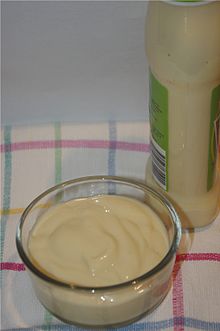
Condiment of the Week - Salad Cream

Salad cream is a creamy, pale yellow condiment based on an emulsion of about 25–50 percent oil in
Heinz Salad Cream
water, emulsified by egg yolk and acidulated by spirit vinegar. It may include other ingredients such as sugar, mustard, salt, thickener, spices, flavoring and coloring. It was introduced in the United Kingdom in the 1920s, where it is used as a salad dressing and a sandwich spread. Due to the higher cost of ingredients during periods of rationing in the United Kingdom a flavor similar to mayonnaise was achieved in the creation of salad cream.


In the United Kingdom, it has been produced by companies including H. J. Heinz Company and Crosse and Blackwell. Heinz Salad Cream was the first brand developed exclusively for the United Kingdom market. When first created in the Harlesden (London) kitchens of Heinz in 1914 the preparation was done by hand. The jars were packed in straw-lined barrels—12 dozen in each. The work schedule was 180 dozen jars a day, with a halfpenny a dozen bonus if the workforce could beat the target.

Salad cream is available in most supermarkets in Canada, Ireland and Malta, as well as in Australia, where its taste may closely resemble that of "mayonnaise" as it is produced in that country.

Salad cream was not readily available in the United States until the 21st century (though Miracle Whip provided a similar, if thicker alternative); however, with the large population of British expatriates, especially in the Northeast, it is becoming more common. Apart from many expat stores, major retail supermarket chains such as New York-based Wegmans, Maine-based Hannaford[citation needed], Massachusetts-based Stop and Shop[citation needed], Florida-based Publix, California-based Cost Plus World Markets and Michigan-based Meijer now sell salad cream as a regular item. Many supermarkets sell national and store brands of salad dressing which resemble salad cream.


Monday, March 28, 2016

Kitchen Hint of the Day!

A little Vinegar....


To cut down on odors when cooking cabbage, cauliflower, etc., add a little vinegar to the cooking water.

Thursday, March 3, 2016

Condiment of the Week - Ketchup

Ketchup, or catsup, is a table sauce. Traditionally, different recipes featured ketchup made of egg
Homemade tomato ketchup
white, mushrooms, oysters, mussels, walnuts, or other foods, but in modern times the term without modification usually refers to tomato ketchup, often called tomato sauce in the UK. It is a sweet and tangy sauce, typically made from tomatoes, a sweetener, vinegar, and assorted seasonings and spices. Seasonings vary by recipe, but commonly include onions, allspice, cloves, cinnamon, garlic, and sometimes celery. Heinz tomato ketchup is the market leader, with an 82% market share in the UK and 60% share in the US.

Tomato ketchup is often used as a condiment with various dishes that are usually served hot, including chips/fries, hamburgers, sandwiches, hot dogs, eggs, and grilled or fried meat. Ketchup is sometimes used as a basis or ingredient for other sauces and dressings. Ketchup is also used as a flavoring for things such as potato chips, and this variety of chips is one of the most popular flavors in Canada. This flavor of potato chip has also been offered in the U.S. as recently as September 2014.


In the 17th century, the Chinese mixed a concoction of pickled fish and spices and called it (in the Amoy dialect) kôe-chiap or kê-chiap.  Mandarin Chinese guÄ« zhÄ«, Cantonese gwai1 zap1) meaning the brine of pickled fish  or shellfish. By the early 18th century, the table sauce had made it to the Malay states (present day Malaysia and Singapore), where it was discovered by English explorers. The Indonesian-Malay word for the sauce was kecap (pronounced "kay-chap"). That word evolved into the English word "ketchup". English settlers took ketchup with them to the American colonies.


Mushroom ketchup
In the United Kingdom, preparations of ketchup were historically and originally prepared with
Homemade mushroom ketchup 
mushroom as a primary ingredient, rather than tomato. Ketchup recipes begin to appear in British and then American cookbooks in the 18th century. In a 1742 London cookbook the fish sauce has already taken on a very British flavor, with the addition of shallots and mushroom. The mushrooms soon became a main ingredient, and from 1750 to 1850 the word ketchup began to mean any number of thin dark sauces made of mushrooms or even walnuts. In the United States, mushroom ketchup dates back to at least 1770, and was prepared by British colonists in "English speaking colonies in North America". In contemporary times, mushroom ketchup is available in the UK, although it is not a commonly used condiment.


Tomato Ketchup
Many variations of ketchup were created, but the tomato-based version did not appear until about a century after other types. By 1801, a recipe for tomato ketchup was created by Sandy Addison and was later printed in an American cookbook, the Sugar House Book.

1 - Get [the tomatoes] quite ripe on a dry day, squeeze them with your hands till reduced to a pulp,
Tomato ketchup with additional condiments
then put half a pound of fine salt to one hundred tomatoes, and boil them for two hours.
2 - Stir them to prevent burning.
3 - While hot press them through a fine sieve, with a silver spoon till nought but the skin remains, then add a little mace, 3 nutmegs, allspice, cloves, cinnamon, ginger, and pepper to taste.
4 - Boil over a slow fire till quite thick, stir all the time.
5 - Bottle when cold.
6 - One hundred tomatoes will make four or five bottles and keep good for two or three years.
This early recipe for "Tomata Catsup" from 1817 still has the anchovies that betray its fish-sauce ancestry:

1 - Gather a gallon of fine, red, and full ripe tomatas; mash them with one pound of salt.
2 - Let them rest for three days, press off the juice, and to each quart add a quarter of a pound of anchovies, two ounces of shallots, and an ounce of ground black pepper.
3 - Boil up together for half an hour, strain through a sieve, and put to it the following spices; a quarter of an ounce of mace, the same of allspice and ginger, half an ounce of nutmeg, a drachm of coriander seed, and half a drachm of cochineal.
4 - Pound all together; let them simmer gently for twenty minutes, and strain through a bag: when cold, bottle it, adding to each bottle a wineglass of brandy. It will keep for seven years.
By the mid-1850s, the anchovies had been dropped.

James Mease published another recipe in 1812. In 1824, a ketchup recipe using tomatoes appeared in The Virginia Housewife (an influential 19th-century cookbook written by Mary Randolph, Thomas Jefferson's cousin). American cooks also began to sweeten ketchup in the 19th century.

As the century progressed, tomato ketchup began its ascent in popularity in the United States.
Tomatoes and tomato ketchup
Ketchup was popular long before fresh tomatoes were. Many Americans continued to question whether it was safe to eat raw tomatoes. However, they were much less hesitant to eat tomatoes as part of a highly processed product that had been cooked and infused with vinegar and spices.

Tomato ketchup was sold locally by farmers. Jonas Yerkes is credited as the first American to sell tomato ketchup in a bottle. By 1837, he had produced and distributed the condiment nationally. Shortly thereafter, other companies followed suit. F. & J. Heinz launched their tomato ketchup in 1876. Heinz tomato ketchup was advertised: "Blessed relief for Mother and the other women in the household!", a slogan which alluded to the lengthy and onerous process required to produce tomato ketchup in the home. With industrial ketchup production and a need for better preservation there was a great increase of sugar in ketchup, leading to our modern sweet and sour formula.

The Webster's Dictionary of 1913 defined ‘catchup’ as: “table sauce made from mushrooms, tomatoes, walnuts, etc.

Modern ketchup emerged in the early years of the 20th century, out of a debate over the use of sodium benzoate as a preservative in condiments. Harvey W. Wiley, the "father" of the Food and Drug Administration in the US, challenged the safety of benzoate which was banned in the 1906 Pure Food and Drug Act. In response, entrepreneurs including Henry J. Heinz, pursued an alternative recipe that eliminated the need for that preservative.

Prior to Heinz (and his fellow innovators), commercial tomato ketchups of that time were watery and thin, in part due to the use of unripe tomatoes, which were low in pectin. They had less vinegar than modern ketchups; by pickling ripe tomatoes, the need for benzoate was eliminated without spoilage or degradation in flavor. But the changes driven by the desire to eliminate benzoate also produced changes that some experts believe were key to the establishment of tomato ketchup as the dominant American condiment.


In fast food outlets, ketchup is often dispensed in small packets. Diners tear the side or top and
Ketchup packets
squeeze the ketchup out of the ketchup packets. In 2011, Heinz began offering a new measured-portion package, called the "Dip and Squeeze" packet, which allowed the consumer to either tear the top off the package and squeeze the contents out, as with the traditional packet, or, in the alternative, tear the front off the package and use the package as a dip cup of the type often supplied with certain entreés.

Previously, fast food outlets dispensed ketchup from pumps into paper cups. This method has made a resurgence in the first decade of the 21st century with cost and environmental concerns over the increasing use of individual packets.

In October 2000, Heinz introduced colored ketchup products called EZ Squirt, which eventually included green (2000), purple (2001), pink (2002), orange (2002), teal (2002), and blue (2003). These products were made by adding food coloring to the traditional ketchup. As of January 2006 these products have been discontinued.


Thursday, February 18, 2016

Condiment of the Week - Hot Sauce (My Favorite)

Hot sauce, also known as chili sauce or pepper sauce is any spicy sauce condiment made from chili peppers and other ingredients.


Humans have used chili peppers and other hot spices for thousands of years. Inhabitants of Mexico,
There are thousands of varieties of hot sauce
Central America and South America had chili peppers more than 6,000 years ago. Within decades of contact with Spain and Portugal in the 16th century, the American plant was carried across Europe and into Africa and Asia, and altered through selective breeding. One of the first commercially available bottled hot sauces in North America appeared in 1807 in Massachusetts. However, of the early brands in the 1800s, few survive to this day. Tabasco sauce is the earliest recognizable brand in the United States hot sauce industry, appearing in 1868 and becoming synonymous with the term hot sauce in the USA. As of 2010, it was the number 13 best-selling condiment in the United States preceded by Frank's RedHot Sauce in number 12 place, which was the sauce first concocted and used with the creation of Buffalo wings.


A fermented hot sauce
There are many recipes for hot sauces but the only common ingredient is some variety of chili pepper. Many hot sauces are made by using chili peppers as the base and can be as simple as adding
salt and vinegar while other sauces use some type of fruits or vegetables as the base and add the chili peppers to make them hot. Manufacturers use many different processes from aging in containers, to pureeing and cooking the ingredients to achieve a desired flavor. Because of their ratings on the Scoville scale, Ghost pepper and Habanero peppers are used to make the hotter sauces but additional ingredients are used to add extra heat, such as pure capsaicin extract and mustard oil. Other common ingredients include vinegar and spices. Vinegar is used primarily as a natural preservative, but flavored vinegars can be used to attain a different taste.


Mexico: Mexican hot sauce typically focuses more on flavor than on intense heat that is the sole reason for existence of white pepper in form of diluted oil as a prime ingredient during processing. Chipotles are a very popular ingredient of Mexican hot sauce and although the sauces are hot, the individual flavors of the peppers are more pronounced. Vinegar is used sparingly or not at all in Mexican sauces, but some particular styles are high in vinegar content similar to the American Louisiana-style sauces. Some hot sauces may include using the seeds from the popular achiote plant for coloring or a slight flavor additive. The process of adobos (marinade) has been used in the past as a preservative but now it is mainly used to enhance the flavor of the peppers and they rely more on the use of vinegar. Mexican-style sauces are primarily produced in Mexico but they are also produced internationally. The Spanish term for sauce is Salsa (sauce), and in English-speaking countries usually refers to the often tomato-based, hot sauces typical of Mexican cuisine, particularly those used as dips. There are many types of Salsa (sauce) which usually vary throughout Latin America.
* These are some of the notable companies producing Mexican style hot sauce.
* Búfalo A popular Mexican sauce
* Cholula Hot Sauce Known for its iconic round wooden cap
* Valentina A traditional Mexican sauce


United States: The varieties of peppers that are used often are cayenne, chipotle, habanero and jalapeño. Some hot sauces, notably Tabasco sauce, are aged in wooden casks similar to the preparation of wine and fermented vinegar. Other ingredients, including fruits and vegetables such as raspberries, mangoes, carrots, and chayote squash are sometimes used to add flavor, mellow the heat of the chilis, and thicken the sauce's consistency.
* Artisan hot sauces are manufactured by smaller producers and private labels in the United States. Their products are produced in smaller quantities in a variety of flavors. Many sauces have a theme to catch consumers attention.
* Louisiana-style: Louisiana-style hot sauce contains red chili peppers (tabasco and/or cayenne are the most popular), vinegar and salt. Occasionally xanthan gum or other thickeners are used.
* Frank's Red Hot Known as the primary ingredient in the first buffalo wing sauce
* Louisiana Hot Sauce Introduced in 1928, A cayenne pepper based hot sauce produced by Bruce Foods Corporation in New Iberia, Louisiana
* Mad dog 357 Introduced in 1991 by Ashley Food Company deemed as one of the hottest hot sauces produced in the United States.
* Tabasco sauce Earliest recognizable brand in the hot sauce industry, appearing in 1868.
Texas Pete Introduced in 1929, developed and manufactured by the TW Garner Food Company in Winston-Salem, North Carolina
* Trappey's Hot Sauce Company was founded in 1898
* Chili pepper water: Used primarily in Hawaii, this concoction is ideal for cooking. It is made from whole chilies, garlic, salt, and water. Often homemade, the pungent end product must be sealed carefully to prevent leakage.
* Sriracha sauce A traditional Thai hot sauce, made primarily of ground chilies, garlic, vinegar, sugar, and salt. Often called "rooster sauce" after the most widely sold U.S. brand's label.
* A very mild chili sauce is produced by Heinz and other manufacturers, and is frequently found in cookbooks in the U.S. This style chili sauce is based on tomatoes, green and/or red bell peppers, and spices; and contains little chili pepper. This sauce is more akin to tomato ketchup and cocktail sauce than predominantly chili pepper-based sauces.
* New Mexico: New Mexican style chile sauces differ from others in that they contain no vinegar. Almost every traditional New Mexican dish is served with red or green chile sauce. The sauce is often added to meats, eggs, vegetables, breads, and some dishes are, in fact, mostly chile sauce with a modest addition of pork, beef, or beans.
* Green chile: This sauce is prepared from any fire roasted native green chile peppers, Hatch, Santa Fe, Albuquerque Tortilla Company, Bueno and Big Jim are common varieties. The skins are removed and peppers diced. Onions are fried in lard and a roux is prepared. Broth and chile peppers are added to the roux and thickened. Its consistency is similar to gravy, and it is used as such. It also is used as a salsa.
* Red chile: A roux is made from lard and flour. The dried ground pods of native red chiles are added. Water is added and the sauce is thickened.


The heat, or burning sensation, experienced when consuming hot sauce is caused by capsaicin and
Habanero, bell pepper and garlic hot sauce
related capsaicinoids. The burning sensation is not "real" in the sense of damage being wrought on tissues. The mechanism of action is instead a chemical interaction with the neurological system.

The seemingly subjective perceived heat of hot sauces can be measured by the Scoville scale. The Scoville scale number indicates how many times something must be diluted with an equal volume of water until people can no longer feel any sensation from the capsaicin. The hottest hot sauce scientifically possible is one rated at 16,000,000 Scoville units, which is pure capsaicin. An example of a hot sauce marketed as achieving this level of heat is Blair's 16 Million Reserve (due to production variances, it is up to 16 million Scoville units), marketed by Blair's Sauces and Snacks. By comparison, Tabasco sauce is rated between 2,500 and 5,000 Scoville units (batches vary) - with one of the mildest commercially available condiments, Cackalacky Classic Condiment Company's Spice Sauce, weighing in at less than 1000 Scoville units on the standard heat scale.

A general way to estimate the heat of a sauce is to look at the ingredients list. Sauces tend to vary in heat based on the kind of peppers used, and the further down the list, the less the amount of pepper.

* Cayenne - Sauces made with cayenne, including most of the Louisiana-style sauces, are usually hotter than jalapeño, but milder than other sauces.
* Chile de árbol - A thin and potent Mexican chili pepper also known as bird's beak chile and rat's tail chile. Their heat index uses to be between 15,000 and 30,000 Scoville units, but it can reach over 100,000 units. In cooking substitutions, the Chile de árbol pepper can be traded with Cayenne pepper.
* Habanero - Habanero pepper sauces were known as the hottest natural pepper sauces, but nowadays species like Bhut jolokia, Naga jolokia or Trinidad Scorpion Moruga are even five or ten-fold hotter.
* Jalapeño - These sauces include green and red jalapeño chilis, and chipotle (ripened and smoked). Green jalapeño and chipotle are usually the mildest sauces available. Red jalapeño sauce is generally hotter.
* Naga Bhut Jolokia - The pepper is also known as Bhut Jolokia, ghost pepper, ghost chili pepper, red naga chilli, and ghost chilli. In 2007, Guinness World Records certified that the Ghost Pepper (Bhut Jolokia) was the world's hottest chili pepper, 400 times hotter than Tabasco sauce; however, in 2011 it has since been superseded by the Trinidad Moruga Scorpion.
* Piri piri - The Peri Peri pepper has been naturalized into South Africa and is also known as the African Bird’s Eye pepper, Piri-Piri pepper or Pili-Pili pepper, depending on what area of the country you’re in. The pepper ranges from one half to one inch in length and tapers at a blunt point. The small package packs a mighty punch with a 175,000 rating on the Scoville scale which is near where the habanero pepper is but the pepper is smaller and has a much different flavor. It is most commonly used in a hot sauce, combined with other spices and seasonings because it has a very light, fresh citrus-herbal flavor that blends well with the flavors of most other ingredients.
* Scotch Bonnet - Similar in heat to the Habanero are these peppers popular in the Caribbean. Often found in Jamaican hot sauces.
* Tabasco peppers - Sauces made with tabasco peppers are generally hotter than cayenne pepper sauces. Along with Tabasco, a number of sauces are made using tabasco peppers.
* Trinidad Moruga Scorpion The golf ball-sized chili pepper has a tender fruit-like flavor. According to the New Mexico State University Chile Institute, the Trinidad Scorpion Moruga Blend ranks as high as 2,009,231 SHU on the Scoville scale.
* Capsaicin extract - The hottest sauces are made from capsaicin extract. These range from extremely hot pepper sauce blends to pure capsaicin extracts. These sauces are extremely hot and should be considered with caution by those not used to fiery foods. Many are too hot to consume more than a drop or two in a pot of food. These novelty sauces are typically only sold by specialty retailers and are usually more expensive.
* Other ingredients - heat is also affected by other ingredients. Mustard oil and wasabi can be added to increase the sensation of heat but generally, more ingredients in a sauce dilute the effect of the chilis, resulting in a milder flavor. Many sauces contain tomatoes, carrots, onions, garlic or other vegetables and seasonings. Vinegar or lemon juice are also common ingredients in many hot sauces because their acidity will help keep the sauce from oxidizing, thus acting as a preservative.


Capsaicinoids are the chemicals responsible for the "hot" taste of chili peppers. They are fat soluble
Original Tabasco red pepper sauce
and therefore water will be of no assistance when countering the burn. The most effective way to relieve the burning sensation is with dairy products, such as milk and yogurt. A protein called casein occurs in dairy products which binds to the capsaicin, effectively making it less available to "burn" the mouth, and the milk fat helps keep it in suspension. Rice is also useful for ameliorating the impact, especially when it is included with a mouthful of the hot food. These foods are typically included in the cuisine of cultures that specialise in the use of chilis. Mechanical stimulation of the mouth by chewing food will also partially mask the pain sensation.


Thursday, February 11, 2016

Condiment of the Week - Horseradish Sauce

Horseradish (Armoracia rusticana, syn. Cochlearia armoracia) is a perennial plant of the Brassicaceae
family (which also includes mustard, wasabi, broccoli, and cabbage). It is a root vegetable used as a spice.

The plant is probably native to southeastern Europe and western Asia. It is now popular around the world. It grows up to 1.5 meters (4.9 feet) tall, and is cultivated primarily for its large, white, tapered root.

The intact horseradish root has hardly any aroma. When cut or grated, however, enzymes from the now-broken plant cells break down sinigrin (a glucosinolate) to produce allyl isothiocyanate (mustard oil), which irritates the mucous membranes of the sinuses and eyes. Grated mash should be used immediately or preserved in vinegar for best flavor. Once exposed to air or heat it will begin to lose its pungency, darken in color, and become unpleasantly bitter tasting over time.


Horseradish sauce made from grated horseradish root and vinegar is a popular condiment in the
United Kingdom and in Poland. In the UK it is usually served with roast beef, often as part of a traditional Sunday roast, but can be used in a number of other dishes also, including sandwiches or salads. A variation of horseradish sauce, which in some cases may substitute the vinegar with other products like lemon juice or citric acid, is known in Germany as Tafelmeerrettich. Also popular in the UK is Tewkesbury mustard, a blend of mustard and grated horseradish originating in medieval times and mentioned by Shakespeare (Falstaff says: "his wit's as thick as Tewkesbury Mustard" in Henry IV Part II. A very similar mustard, called Krensenf or Meerrettichsenf, is popular in Austria and parts of Eastern Germany. In France, sauce au raifort is popular in Alsatian cuisine.

In the U.S., the term "horseradish sauce" refers to grated horseradish combined with mayonnaise or salad dressing. Prepared horseradish is a common ingredient in Bloody Mary cocktails and in cocktail sauce, and is used as a sauce or sandwich spread. Horseradish cream is a mixture of horseradish and sour cream and is served alongside au jus for a prime rib dinner.

Friday, January 15, 2016

Kitchen Hint of the Day!

Something Fishy......

To get rid of odors while cooking fish, add 2 tablespoons of vinegar (any variety) to 2 cups of water, then simmer it in a small saucepan while the fish is cooking. Tried, tested, and true!

Thursday, December 24, 2015

Condiment of the Week - Chili Sauce

Chili sauce is a condiment prepared with chili peppers and red tomato as primary ingredients. Chili
Chili sauce
sauce may be hot, sweet or a combination thereof, and may differ from hot sauce in that many sweet or mild varieties exist, which is typically lacking in hot sauces. Several varieties of chili sauce include sugar in their preparation, such as sweet chili sauce and Thai sweet chili sauce, which adds sweetness to their flavor profile. Chili sauce may have a thicker texture and viscosity when compared to that of hot sauces.

Chili sauce can be used as a dipping sauce, cooking glaze and marinade. Sweet chili sauce is used in Thai cuisine, and is also sometimes used in the preparation of sushi.

Many commercial varieties of mass-produced chili sauce exist.


Ingredients typically include puréed or chopped chili peppers, vinegar, sugar and salt that are cooked, which thickens the mixture. Additional ingredients may include, water, garlic, other foodstuffs, corn syrup, spices and seasonings. Some varieties use ripe red puréed tomato as the primary ingredient.


Many commercial varieties of mass-produced chili sauce exist. Some commercially produced chili
Fritters served with chili sauce in a ramekin
sauces are canned, with red tomato that is processed into a pulp used as the primary ingredient. The H. J. Heinz Company is one major producer of chili sauces. In the United States, commercially produced chili sauces are assigned various grades per their quality. These grades include U.S. Grade A (also known as U.S. Fancy), U.S. Grade C (also known as U.S. Standard) and Substandard. Criteria in food grading for chili sauces in the U.S. includes coloration, consistency, character, absence of defects and flavor.

Sriracha sauce, a type of hot chili sauce manufactured by Huy Fong Foods, has become increasingly popular in the United States in contemporary times.

Sriracha sauce is a type of hot sauce or chili sauce made from a paste of chili peppers, distilled vinegar, garlic, sugar, and salt. It is named after the coastal city of Si Racha, in the Chonburi Province of Eastern Thailand, where it was possibly first produced for dishes served at local seafood restaurants.

A type of chili sauce is Thai sweet chili sauce, which is used as a dipping sauce, a marinade, and for cooking, such as in stir fried dishes. The company Mae Ploy is a major manufacturer of Thai sweet chili sauce. Most major supermarket chain stores in North America carry Thai sweet chili sauce.

Some versions of Nam phrik, a range of chili-based, hot sauces typical of Thai cuisine, are sweetened with sugar.


Thursday, December 17, 2015

Condiment of the Week - Barbecue Sauce

Barbecue sauce (also abbreviated BBQ sauce) is a flavoring sauce used as a marinade, basting or
The St. Louis barbecue style 
topping for meat cooked in the barbecue cooking style, including pork or beef ribs and chicken. It is an ubiquitous condiment and is used on many other foods as well.

The ingredients vary widely even within individual countries, but most include some variation on vinegar and/or tomato paste as a base, as well as liquid smoke, spices such as mustard and black pepper, and sweeteners such as sugar or molasses.


Some place the origin of barbecue sauce at the formation of the first American colonies in the 17th century. References to the substance start occurring in both English and French literature over the next two hundred years. South Carolina mustard sauce, a type of barbecue sauce, can be traced to German settlers in the 18th century.

Early cookbooks did not tend to include recipes for barbecue sauce. The first commercially produced barbecue sauce was made by the Georgia Barbecue Sauce Company in Atlanta, Georgia. Its sauce was advertised for sale in the Atlanta Constitution, January 31, 1909. Heinz released its barbecue sauce in 1940. Kraft Foods also started making cooking oils with bags of spice attached, supplying another market entrance of barbecue sauce.


Different geographical regions have allegiances to their particular styles and variations for barbecue sauce. For example, vinegar and mustard-based barbecue sauces are popular in certain areas of the southern United States, while in the northern U.S. tomato-based barbecue sauces are well-known. In Asian countries a ketchup and corn syrup-based sauce is common. Mexican salsa can also be used as a base for barbecue sauces.


South America
The sauce for asado, similar to barbecue in Argentina and Uruguay, is called chimichurri – a parsley
Chimichurri
based green sauce used as a condiment on the table, a marinade, and a grilling sauce. Chimichurri is used on beef, lamb, pork, goat, fowl, venison and root vegetables. Chilean pebre, which is based on chopped tomato and contains onion, parsley or coriander and sometimes chilli, can be used in a similar manner, or served as an accompaniment to asado; sauces in the Andean countries of Bolivia, Peru and Ecuador tend to be more piquant.

In Brazil, the typical barbecue sauce is called vinaigrette (made with vinegar, olive oil, tomatoes, parsley and onions).


Australia
In Australia, "barbecue sauce" principally refers to a condiment in the same regard as ketchup. Typically it is a caramelized tomato-based sauce, dark brown in color, replicating the smoky flavors of barbecue grilling. Australian barbecue sauce made at home is sometimes simply a blend of tomato sauce and Worcestershire sauce. Commercially, the various brands in the market range from a fruity flavor to a sauce similar to brown sauce.


United States
The U.S. has a wide variety of differing barbecue sauce tastes. Some are based in regional tradition.
Hunt's barbecue sauce. 

* East Carolina Sauce – Most American barbecue sauces can trace their roots to the two sauces common in North Carolina. The simplest and the earliest were supposedly popularized by African slaves who also advanced the development of American barbecue. They were made with vinegar, ground black pepper, and hot chili pepper flakes. It is used as a "mopping" sauce to baste the meat while it was cooking and as a dipping sauce when it is served. Thin and sharp, it penetrates the meat and cuts the fats in the mouth. There is little or no sugar in this sauce.
* Lexington Dip (a.k.a. Western Carolina Dip or Piedmont Dip) – In Lexington and in the "Piedmont" hilly areas of western North Carolina, the sauce is often called a dip. It is a lot like the East Carolina Sauce (above) with tomato paste, tomato sauce, or ketchup added.
* Kansas City – Thick, reddish-brown, tomato or ketchup-based with sugars, vinegar, and spices. Evolved from the Lexington Dip (above), it is significantly different in that it is thick and sweet and does not penetrate the meat as much as sit on the surface. This is the most common and popular sauce in the US and all other tomato based sauces are variations on the theme using more or less of the main ingredients.
* Memphis – Similar to the Kansas City style, typically having the same ingredients, but tending to have a larger percentage of vinegar and use molasses as a sweetener.
* Florida – Similar to the Memphis style because it has a higher percentage of vinegar than Kansas City style. Florida style is characterized by the tropical fruit flavors such as orange, mango, guava, papaya, pineapple, and tamarind as well as peppers with some heat such as chipotle and habanero. Because of its fruity flavor it is commonly served with pork, chicken and seafood.
* South Carolina Mustard Sauce – Part of South Carolina is known for its yellow barbecue sauces made primarily of yellow mustard, vinegar, sugar and spices. This sauce is most common in a belt from Columbia to Charleston, an area settled by many Germans. Vinegar-based sauces with black pepper are common in the coastal plains region as in North Carolina, and thin tomato- and vinegar-based sauces are common in the hilly regions as in North Carolina.
* Texas – In some of the older, more traditional restaurants the sauces are heavily seasoned with cumin, chili peppers, bell peppers, chili powder or ancho powder, lots of black pepper, fresh onion, only a touch of tomato, little or no sugar, and they often contain meat drippings and smoke flavor because meats are dipped into them. They are medium thick and often resemble a thin tomato soup. They penetrate the meat easily rather than sit on top. Bottled barbecue sauces from Texas are often different from those used in the same restaurants because they do not contain meat drippings.
* Alabama White Sauce – North Alabama is known for its distinctive white sauce, a mayonnaise-based sauce, which is used predominantly on chicken and pork. It is composed of mayonnaise, vinegar, sugar, salt and black pepper.


Asia
* Hoisin sauce, a type of Chinese-style barbecue sauce, serves as a base ingredient in many other recipes for Chinese barbecue sauces
* A spicy, yogurt-based barbecue sauce is used for tandoori chicken, an Indian dish
* A sweet soy sauce marinade (tare in Japanese; "teriyaki sauce" in the west) is used for teriyaki, a Japanese-style grill (traditionally fish), before and during the grilling process.
* For Korean Galbi, a ganjang-based sauce is used, often referred to as Galbi or Kalbi sauce. It is used as a marinade. The sauce is generally made from soy sauce, garlic, and sugar, though variations with sesame oil, rice wine, hot pepper paste, fruit juice, lemon-lime soda and honey are common.


Kitchen Hint of the Day!

Thank you to Kortty for passing this hint along....

To cut down on odors when cooking cabbage, cauliflower, etc., add a little vinegar to the cooking water.