Thank you to Ginny for passing this hint along............
If you wet your hands with cold water before shaping sausages or hamburger patties, the grease won't stick to your fingers. Grill them burgers!
Showing posts with label Water. Show all posts
Showing posts with label Water. Show all posts
Saturday, March 24, 2018


Monday, October 3, 2016
Kitchen Hint of the Day!
Thank you to D.L. for sharing this hint.....
A good way to reheat biscuits or rolls is to sprinkle them lightly with water and wrap them in foil. Reheat them in preheated oven at 350 degrees for about 5 minutes, and done!
A good way to reheat biscuits or rolls is to sprinkle them lightly with water and wrap them in foil. Reheat them in preheated oven at 350 degrees for about 5 minutes, and done!
Thursday, May 12, 2016
Condiment of the Week - Salad Cream
Salad cream is a creamy, pale yellow condiment based on an emulsion of about 25–50 percent oil in
water, emulsified by egg yolk and acidulated by spirit vinegar. It may include other ingredients such as sugar, mustard, salt, thickener, spices, flavoring and coloring. It was introduced in the United Kingdom in the 1920s, where it is used as a salad dressing and a sandwich spread. Due to the higher cost of ingredients during periods of rationing in the United Kingdom a flavor similar to mayonnaise was achieved in the creation of salad cream.
In the United Kingdom, it has been produced by companies including H. J. Heinz Company and Crosse and Blackwell. Heinz Salad Cream was the first brand developed exclusively for the United Kingdom market. When first created in the Harlesden (London) kitchens of Heinz in 1914 the preparation was done by hand. The jars were packed in straw-lined barrels—12 dozen in each. The work schedule was 180 dozen jars a day, with a halfpenny a dozen bonus if the workforce could beat the target.
Salad cream is available in most supermarkets in Canada, Ireland and Malta, as well as in Australia, where its taste may closely resemble that of "mayonnaise" as it is produced in that country.
Salad cream was not readily available in the United States until the 21st century (though Miracle Whip provided a similar, if thicker alternative); however, with the large population of British expatriates, especially in the Northeast, it is becoming more common. Apart from many expat stores, major retail supermarket chains such as New York-based Wegmans, Maine-based Hannaford[citation needed], Massachusetts-based Stop and Shop[citation needed], Florida-based Publix, California-based Cost Plus World Markets and Michigan-based Meijer now sell salad cream as a regular item. Many supermarkets sell national and store brands of salad dressing which resemble salad cream.
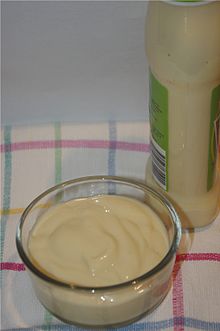 |
| Heinz Salad Cream |
In the United Kingdom, it has been produced by companies including H. J. Heinz Company and Crosse and Blackwell. Heinz Salad Cream was the first brand developed exclusively for the United Kingdom market. When first created in the Harlesden (London) kitchens of Heinz in 1914 the preparation was done by hand. The jars were packed in straw-lined barrels—12 dozen in each. The work schedule was 180 dozen jars a day, with a halfpenny a dozen bonus if the workforce could beat the target.
Salad cream is available in most supermarkets in Canada, Ireland and Malta, as well as in Australia, where its taste may closely resemble that of "mayonnaise" as it is produced in that country.
Salad cream was not readily available in the United States until the 21st century (though Miracle Whip provided a similar, if thicker alternative); however, with the large population of British expatriates, especially in the Northeast, it is becoming more common. Apart from many expat stores, major retail supermarket chains such as New York-based Wegmans, Maine-based Hannaford[citation needed], Massachusetts-based Stop and Shop[citation needed], Florida-based Publix, California-based Cost Plus World Markets and Michigan-based Meijer now sell salad cream as a regular item. Many supermarkets sell national and store brands of salad dressing which resemble salad cream.
Monday, December 7, 2015
One of America's Favorites - Hot Chocolate
Hot chocolate, also known as hot cocoa, is a heated beverage consisting of shaved chocolate, melted
chocolate or cocoa powder, heated milk or water, and often sugar. Hot chocolate made with melted chocolate is sometimes called drinking chocolate, characterized by less sweetness and a thicker consistency.
The first chocolate beverage is believed to have been created by the Aztecs around 2,000 years ago, and a cocoa beverage was an essential part of Aztec culture by 1400 AD. The beverage became popular in Europe after being introduced from Mexico in the New World and has undergone multiple changes since then. Until the 19th century, hot chocolate was even used medicinally to treat ailments such as liver and stomach diseases. Today, hot chocolate is consumed throughout the world and comes in multiple variations including the very thick cioccolata densa served in Italy and chocolate a la taza served in Spain, and the thinner hot cocoa consumed in the United States.
An early Classic period (460-480 AD) Mayan tomb from the site of Rio Azul, Guatemala, had vessels with the Maya glyph for cacao on them with residue of a chocolate drink.
To make the chocolate drink, which was served cold, the Maya ground cocoa seeds into a paste and mixed it with water, cornmeal, chili peppers, and other ingredients. They then poured the drink back and forth from a cup to a pot until a thick foam developed. Chocolate was available to Maya of all social classes, although the wealthy drank chocolate from elaborately decorated vessels.
What the Spaniards then called "chocolatl" was said to be a beverage consisting of a chocolate base flavored with vanilla and other spices that was served cold.
Because sugar was yet to come to the Americas, xocolatl was said to be an acquired taste. The drink tasted spicy and bitter as opposed to sweetened modern hot chocolate. As to when xocolatl was first served hot, sources conflict on when and by whom. However, Jose de Acosta, a Spanish Jesuit missionary who lived in Peru and then Mexico in the later 16th century, described xocolatl as:
Loathsome to such as are not acquainted with it, having a scum or froth that is very unpleasant taste. Yet it is a drink very much esteemed among the Indians, where with they feast noble men who pass through their country. The Spaniards, both men and women, that are accustomed to the country, are very greedy of this Chocolate. They say they make diverse sorts of it, some hot, some cold, and some temperate, and put therein much of that "chili"; yea, they make paste thereof, the which they say is good for the stomach and against the catarrh.
A distinction is sometimes made between "hot cocoa", made from powder made by removing most of the rich cocoa butter from the ground cacao beans, and "hot chocolate", made directly from bar chocolate, which already contains cocoa, sugar, and cocoa butter. Thus, the major difference between the two is the cocoa butter, the absence of which makes hot cocoa significantly lower in fat than hot chocolate while still preserving all the antioxidants found in chocolate.
Hot chocolate can be made with dark, semisweet, or bittersweet chocolate chopped into small pieces and stirred into milk with the addition of sugar. American instant hot cocoa powder often includes powdered milk or other dairy ingredients so it can be made without using milk. In the United Kingdom, "hot chocolate" is a sweet chocolate drink made with hot milk or water, and powder containing chocolate, sugar, and powdered milk. "Cocoa" usually refers to a similar drink made with just hot milk and cocoa powder, then sweetened to taste with sugar (or not sweetened at all).
In mainland Europe (particularly Spain and Italy), hot chocolate is sometimes served very thick due to the use of a thickening agent such as cornstarch. Among the multiple thick forms of hot chocolate served in Europe is the Italian cioccolata densa. German variations are also known for being very thick and heavy.
Hot chocolate with churros is the traditional working-man's breakfast in Spain. This style of hot chocolate can be extremely thick, often having the consistency of warm chocolate pudding. In the Netherlands, hot chocolate is a very popular drink, known as chocolademelk, it is often served at home or in cafes. In France, hot chocolate is often served at breakfast time; sometimes sliced bread spread with butter, jam, honey, or Nutella is dunked into the hot chocolate. There are also brands of hot chocolate specially formulated for breakfast time, notably Banania.
Even further variations of hot chocolate exist. In some cafes in Belgium and other areas in Europe, one who orders a "warme chocolade" or "chocolat chaud" receives a cup of steaming white milk and a small bowl of bittersweet chocolate chips to dissolve in the milk. Particularly rich hot chocolate is often served in demitasse cups.
In the United States, the drink is popular in instant form, made with hot water or milk from a packet containing mostly cocoa powder, sugar, and dry milk. This is the thinner of the two main variations. It is very sweet and may be topped with marshmallows, whipped cream, or a piece of solid chocolate. Hot chocolate was first brought to North America as early as the 17th century by the Dutch, but the first time colonists began selling hot chocolate was around 1755. Traditionally, hot chocolate has been associated with cold weather, winter, and dessert in the United States.
In Mexico, hot chocolate remains a popular national drink. Besides the instant powder form, traditional Mexican hot chocolate includes semi-sweet chocolate, cinnamon, sugar, and vanilla. Hot chocolate of this type is commonly sold in circular or hexagonal tablets which can be dissolved into hot milk, water, or cream, and then blended until the mixture develops a creamy froth. Mexican cinnamon hot chocolate is traditionally served alongside a variety of Mexican pastries known as pan dulce or with churros.
In Colombia, a hot chocolate beverage made with milk and water using a chocolatera and molinillo is
enjoyed as part of breakfast with bread and soft, fresh farmers cheese. The chocolate bars used in the preparation come with granulated sugar mixed in, and sometimes have flavors such as cinnamon, cloves and vanilla added to the chocolate.
In Peru, hot chocolate is part of an ancient tradition. It is served with panettone at breakfast on Christmas Day, even though summer has already started in the southern hemisphere. This tradition began in Cuzco; for this reason typical brands of chocolate bars are from this cocoa-producing region. Another region which produces best-quality cacao is the San Martin Region in the north Peruvian rainforest.
 |
| A cup of hot chocolate with whipped cream and cocoa powder |
The first chocolate beverage is believed to have been created by the Aztecs around 2,000 years ago, and a cocoa beverage was an essential part of Aztec culture by 1400 AD. The beverage became popular in Europe after being introduced from Mexico in the New World and has undergone multiple changes since then. Until the 19th century, hot chocolate was even used medicinally to treat ailments such as liver and stomach diseases. Today, hot chocolate is consumed throughout the world and comes in multiple variations including the very thick cioccolata densa served in Italy and chocolate a la taza served in Spain, and the thinner hot cocoa consumed in the United States.
An early Classic period (460-480 AD) Mayan tomb from the site of Rio Azul, Guatemala, had vessels with the Maya glyph for cacao on them with residue of a chocolate drink.
To make the chocolate drink, which was served cold, the Maya ground cocoa seeds into a paste and mixed it with water, cornmeal, chili peppers, and other ingredients. They then poured the drink back and forth from a cup to a pot until a thick foam developed. Chocolate was available to Maya of all social classes, although the wealthy drank chocolate from elaborately decorated vessels.
What the Spaniards then called "chocolatl" was said to be a beverage consisting of a chocolate base flavored with vanilla and other spices that was served cold.
Because sugar was yet to come to the Americas, xocolatl was said to be an acquired taste. The drink tasted spicy and bitter as opposed to sweetened modern hot chocolate. As to when xocolatl was first served hot, sources conflict on when and by whom. However, Jose de Acosta, a Spanish Jesuit missionary who lived in Peru and then Mexico in the later 16th century, described xocolatl as:
Loathsome to such as are not acquainted with it, having a scum or froth that is very unpleasant taste. Yet it is a drink very much esteemed among the Indians, where with they feast noble men who pass through their country. The Spaniards, both men and women, that are accustomed to the country, are very greedy of this Chocolate. They say they make diverse sorts of it, some hot, some cold, and some temperate, and put therein much of that "chili"; yea, they make paste thereof, the which they say is good for the stomach and against the catarrh.
A distinction is sometimes made between "hot cocoa", made from powder made by removing most of the rich cocoa butter from the ground cacao beans, and "hot chocolate", made directly from bar chocolate, which already contains cocoa, sugar, and cocoa butter. Thus, the major difference between the two is the cocoa butter, the absence of which makes hot cocoa significantly lower in fat than hot chocolate while still preserving all the antioxidants found in chocolate.
Hot chocolate can be made with dark, semisweet, or bittersweet chocolate chopped into small pieces and stirred into milk with the addition of sugar. American instant hot cocoa powder often includes powdered milk or other dairy ingredients so it can be made without using milk. In the United Kingdom, "hot chocolate" is a sweet chocolate drink made with hot milk or water, and powder containing chocolate, sugar, and powdered milk. "Cocoa" usually refers to a similar drink made with just hot milk and cocoa powder, then sweetened to taste with sugar (or not sweetened at all).
In mainland Europe (particularly Spain and Italy), hot chocolate is sometimes served very thick due to the use of a thickening agent such as cornstarch. Among the multiple thick forms of hot chocolate served in Europe is the Italian cioccolata densa. German variations are also known for being very thick and heavy.
Hot chocolate with churros is the traditional working-man's breakfast in Spain. This style of hot chocolate can be extremely thick, often having the consistency of warm chocolate pudding. In the Netherlands, hot chocolate is a very popular drink, known as chocolademelk, it is often served at home or in cafes. In France, hot chocolate is often served at breakfast time; sometimes sliced bread spread with butter, jam, honey, or Nutella is dunked into the hot chocolate. There are also brands of hot chocolate specially formulated for breakfast time, notably Banania.
Even further variations of hot chocolate exist. In some cafes in Belgium and other areas in Europe, one who orders a "warme chocolade" or "chocolat chaud" receives a cup of steaming white milk and a small bowl of bittersweet chocolate chips to dissolve in the milk. Particularly rich hot chocolate is often served in demitasse cups.
In the United States, the drink is popular in instant form, made with hot water or milk from a packet containing mostly cocoa powder, sugar, and dry milk. This is the thinner of the two main variations. It is very sweet and may be topped with marshmallows, whipped cream, or a piece of solid chocolate. Hot chocolate was first brought to North America as early as the 17th century by the Dutch, but the first time colonists began selling hot chocolate was around 1755. Traditionally, hot chocolate has been associated with cold weather, winter, and dessert in the United States.
In Mexico, hot chocolate remains a popular national drink. Besides the instant powder form, traditional Mexican hot chocolate includes semi-sweet chocolate, cinnamon, sugar, and vanilla. Hot chocolate of this type is commonly sold in circular or hexagonal tablets which can be dissolved into hot milk, water, or cream, and then blended until the mixture develops a creamy froth. Mexican cinnamon hot chocolate is traditionally served alongside a variety of Mexican pastries known as pan dulce or with churros.
In Colombia, a hot chocolate beverage made with milk and water using a chocolatera and molinillo is
 |
Hot chocolate is called warme chocolademelk in the Netherlands.
White hot chocolate
|
In Peru, hot chocolate is part of an ancient tradition. It is served with panettone at breakfast on Christmas Day, even though summer has already started in the southern hemisphere. This tradition began in Cuzco; for this reason typical brands of chocolate bars are from this cocoa-producing region. Another region which produces best-quality cacao is the San Martin Region in the north Peruvian rainforest.
Monday, November 23, 2015
Kitchen Hint of the Day!
Thank you to Kana for passing this hint along.....
Sprinkle a few drops of water on sliced bacon to keep it from shriveling in the pan. I'll have to try this one!
Sprinkle a few drops of water on sliced bacon to keep it from shriveling in the pan. I'll have to try this one!
Tuesday, April 22, 2014
It's Earth Day!

It's Earth Day!
Our planet is at a turning point. The massive global migration underway now from countryside to cities will demand huge investments in energy, water, materials, waste, food distribution, and transportation over the next 25 years. If the right investments are made now, this unique opportunity will be the catalyst for dramatic changes in the built environment and the fight against carbon emissions and climate change.
http://www.earthday.org/
Subscribe to:
Posts (Atom)