Showing posts with label hot dogs. Show all posts

Thursday, January 31, 2019

WILD IDEA BUFFALO - PREMIUM BUFFALO HOT DOGS

Here's all the info you need about the Buffalo Hot Dogs that make the Wild Idea Buffalo Chili Dogs.
Wild Idea Buffalo’s casing-free hot dogs are incredible – one bite and you’ll be hooked. *Nitrite free, and made from our 100% grass-fed buffalo – no filler, no junk. Just mouth-watering flavor in every bite. You won't find these premium Buffalo Hot Dogs in your supermarket cooler.  Our hot dogs are meaty, seasoned, smoked, 100% delicious, and they’ll change the way you think about hot dogs.
https://wildideabuffalo.com/

1 lb. package

Ingredients: 100% Grass-fed Buffalo, Water, Free Binder (modified potato starch, trehalose, carrot fiber), Sea Salt; Organic: Pure Cane Sugar, Paprika, Onion Powder, Garlic Powder. Cultured Celery Powder, Organic: Ground Mustard, Coriander and Black Pepper

*All products are made without the use of added nitrites or nitrates, except for those naturally occurring in sea salt and celery powder.
https://wildideabuffalo.com/collections/brats-sausages-hot-dogs/products/buffalo-hot-dogs

Monday, January 28, 2019

One of America's Favorites - Michigan Hot Dog

Michigan Hot Dog
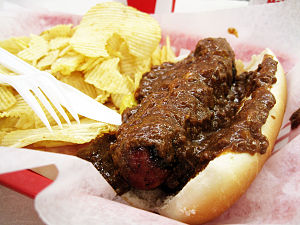
A Michigan hot dog, or simply "Michigan", is a steamed hot dog on a steamed bun topped with a meaty sauce, generally referred to as "Michigan sauce". The sauce may be tomato-based, depending on where the Michigan is purchased. Michigans can be served with chopped onions. If served with onions, the onions can either be buried under the sauce, under the hot dog itself, or sprinkled on top of the sauce.


Michigans are particularly popular in the North Country of New York State, and have been so for many decades. Their popularity soon spread to New York City where they remain a fast food staple. One of the earliest known advertisements for Michigans appeared in the Friday, May 27, 1927, Plattsburgh Daily Republican.

Michigans are also very popular in Montreal and other parts of Quebec, where the sauce is often tomato-based. Lafleur Restaurants, a Quebec fast food chain, is known for its Michigans and poutine.

Oddly enough, "Michigan hot dogs" are never referred to by that name in Michigan itself, nor anywhere else in the Midwest. A similar food item, the Coney Island hot dog or "Coney dog", is natural-casing beef or beef and pork European-style Frankfurter Würstel (Vienna sausage) of German origin having a natural lamb or sheep casing, and topped with a beef heart-based Coney sauce. Conversely, the "Coney Island" is not referred to as such on Coney Island, or anywhere else in New York State, instead called either a "Michigan" or a "Red Hot."


There is no consensus on the origin of the Michigan. Although there are many different varieties of Michigan sauce available today, the original Michigan sauce was possibly created by George Todoroff in Jackson, Michigan. The sauce was originally created to be used as a topping on Coney Island hot dogs. In 1914, Mr. Todoroff founded the Jackson Coney Island restaurant and created his Coney Island chili sauce recipe. He retired in 1945.

How and when Michigan sauce arrived in upstate New York is somewhat of a mystery. The earliest known advertisement for Michigans appeared in the Friday, May 27, 1927, Plattsburgh Daily Republican. The ad announced the opening of "the Michigan Hot-Dog Stand Tuesday May 24, located between the two dance halls". That hot dog stand may be the same one mentioned in the Plattsburgh Sentinel on Sept. 16, 1927, as being owned by a Mr. Garth C. Otis:

"Garth C. Otis has leased the quarters in the Plattsburgh Theatre building formerly occupied as the Locomobile salesroom in which place he will conduct an eating place under the name of the Michigan Hot Dog and Sandwich Shop opening Saturday. Mexican chili con carne will be one of the specialties. Mr. Otis promises a first class place for those who desire short order lunches."

The origin of the "Michigan" name may have come from Plattsburgh residents Jack Rabin and his wife, who fell in love with the Jackson Coney Island hot dog while vacationing in Coney Island and subsequently recreated the sauce at Nitzi's, their Michigan hot dog stand on Route 9 just outside Plattsburgh. However, a 1984 Sentinel article indicates that Nitzi's was established in 1935, and says Jack Rabin indicated "his sauce came from Mrs. Eula Otis, who first coined the name 'Michigans' for her hot dog and sauce." Otis was originally from Nashville and met her husband in Detroit, Michigan, where she learned to make meat sauce. They moved to Plattsburgh in the 1920s.

The Nitzi/Otis recipe is currently in use at Michigans Plus, located in the former IHOP building on Route 3.

In Vermont, the Michigan dog is almost always split and cooked on a grill before the meat sauce onions and mustard are added. Often, the bun (or a slice of bread) is also grilled. The first ones sold around the Burlington area were called Charlie's Red Hots and the small shop was started during World War II by a well-known and respected restaurateur. The family closely guarded the sauce recipe. The originals are no longer sold, but there are many Michigan copies around and many local families claim to have the "Charlie's" sauce recipe.


Monday, January 21, 2019

One of America's Favorites - Coney Island Hot Dog

A Coney Dog

A Coney Island Hot Dog (or Coney Dog or Coney) is a hot dog in a bun topped with a savory meat sauce and sometimes other toppings. It is often offered as part of a menu of dishes of Greek origin and classic American 'diner' dishes and often at Coney Island restaurants. It is largely a phenomenon related to immigration from Greece and Macedonia to the United States in the early 20th century.

"Virtually all" Coney Island variations were developed, apparently independently, by Greek or Macedonian immigrants in the early 1900s, many fleeing the Balkan Wars, who entered the US through Ellis Island in New York City. Family stories of the development of the dishes often included anecdotes about visits to Coney Island.

In 1913 the Coney Island Chamber of Commerce in New York had banned the use of the term "hot dog" on restaurant signs on Coney Island, an action prompted by concerns about visitors taking the term literally and assuming there was dog meat in the sausage. Because of this action by the Chamber of Commerce, immigrants passing through the area didn't know the sausage in a bun by the American moniker "hot dog." Instead, the handheld food would have been known to immigrants as a "coney island."

The name coney can be traced back over a hundred years as a 48 acre peninsula in County Down, Northern Ireland inhabited by small rabbits called conies. The hamlet was later called Coney Island albeit was not really an island. It eventually became a park and offered many amenities for entertainment and food. As Irish immigrants moved to the United States some entrepreneurs wanted to copy the same type of park. As the original Coney Island started in New York other unrelated Coney Islands opened in Michigan and Ohio.

As the legend goes, one particular vender of Vienna sausage sandwiches, later called Weiners then hot dogs decided to dress up the hand held sandwiches with chili, onions and several other items. They came to be know as coney islands. While chili dogs are known throughout the country, it seems the original name has stuck in the Cincinnati, Ohio area as several hundred chili parlors sells what is simply called a coney today.


Regional and local varieties
Indiana

Coney Islands at Ft. Wayne's Famous Coney Island Wiener Stand
Ft. Wayne's Famous Coney Island Wiener Stand was opened in 1914 by three now-unknown Macedonian immigrants. Vasil Eschoff, another Macedonian immigrant, purchased an interest from one of the original owners in 1916. Eschoff's descendants have operated the restaurant since. The Coney Island in Fort Wayne is described as a small, fatty pink hot dog with a "peppery-sweet" coney sauce on a soft bun. However, the ground beef-based coney sauce at Ft. Wayne's Famous Coney Island Wiener Stand has the flavor and consistency of a mild peppered savory pork sausage, reflecting its Macedonian heritage. The small hot dog is grilled on a flattop, placed in a steamed bun, yellow mustard applied, then a few teaspoonfuls of the savory chili sauce are added which is then topped with chopped yellow onion.

Michigan
Jane and Michael Stern, writing in 500 Things to Eat Before it's Too Late, note that "there's only one place to start [to pinpoint the top Coney Islands], and that is Detroit. Nowhere is the passion for them more intense.": James Schmidt, in a debate at the 2018 National Fair Food Summit, noted that "Detroit is synonymous with the Coney Dog: you simply cannot have one without the other."

The Coney Island developed in Michigan is a natural-casing beef or beef and pork European-style Wiener Würstchen (Vienna sausage) of German origin, topped with a beef heart-based sauce, one or two stripes of yellow mustard and diced or chopped onions. The variety is a fixture in Flint, Detroit, Jackson, Kalamazoo, and southeastern Michigan. The style originated in the early 20th century, with competing claims from American and Lafayette Coney Islands (1917) in Detroit, and Todoroff's Original Coney Island (1914) in Jackson. The longest continuously operated Coney Island (in the same location) is in Kalamazoo (1915).

Detroit style

Competing neighboring Coney restaurants in Detroit
In Detroit historically many Greek and Macedonian immigrants operated Coney islands, or restaurants serving Detroit Coney dogs. By 2012 many Albanians began operating them as well. The Greeks established Onassis Coney Island, which has closed. Greek immigrants established the Coney chains Kerby's Koney Island, Leo's Coney Island, and National Coney Island during the 1960s and early 1970s. All three chains sell some Greek food items with Coney dogs. Detroit style sauce is a bean-less chili sauce, differing from the chili dogs they offer only in the lack of beans. National has most of its restaurants on the east side of the city, and Kerby's and Leo's have the bulk of their restaurants on the west side of the Detroit area.

Flint style

Flint style is characterized by a dry hot dog topping made with a base of ground beef heart, which is ground to a consistency of fine-ground beef. Some assert that in order to be an "authentic" Flint
A Flint-style coney
coney, the hot dog must be a Koegel coney and the sauce by Angelo's, which opened in 1949. However, the sauce was originally developed by a Macedonian in 1924, Simion P. (Sam) Brayan, for his Flint's Original Coney Island restaurant. Brayan was the one who contracted with Koegel Meat Company to make the coney they still make today, also contracting with Abbott's Meat to provide the fine-grind beef heart sauce base. Abbott's still makes Brayan's 1924 sauce base available to restaurants and the public through the Koegel Meat Company and Abbott's Meats. Restaurants then add chopped onions sautéed in beef tallow, along with their own spice mix and other ingredients, to Abbott's sauce base to make their sauce.

Popular folklore perpetuates a myth that a Flint coney sauce recipe containing ground beef and ground hot dogs is the "original" Flint Coney sauce recipe. Variations on this story include either that a relative of the storyteller knew or worked with the former owner of Flint's Original and received the recipe from them, or that the wife of the owner of Flint's Original allowed the publication of the recipe in the Flint Journal after his death. Ron Krueger, longtime food writer of the Flint Journal, included it in a collection of recipes from the newspaper but without a cited source, unlike the rest of the recipes in the collection. When asked about this Mr. Krueger replied, "That recipe appeared in The Journal several times over the years. [I don't] think I ever saw it in the context of a story or ever saw any attribution. It always included the word 'original' in the title, but anybody who knows anything knows otherwise." As to the second myth of Brayan's wife later allowing the publication of the recipe, Velicia Brayan died in 1976, while Simion Brayan lived until the age of 100 and died in 1990. The actual source of this recipe appears to be an earlier Flint Journal Food Editor, Joy Gallagher, who included the recipe in her column of May 23, 1978. In that column she stated she had included the recipe in an even earlier column. Her apparent source was "a woman who said she was the wife of a chef at the original Coney Island, and that she copied the recipe from his personal recipe book." Gallagher stated "I believe her". However, Gallagher also wrote, "I'm not making any claims". In the same column she also included a second recipe that used beef heart, which she wrote "came to me recently from a reader who swears it is the sauce served at Angelo's." The folklore has mixed the supposed sources of the two recipes in this column from Gallagher, with people claiming the ground hot dog recipe is reportedly from Angelo's. In his column published in the Flint Journal on April 18, 1995, Food Editor Ron Krueger reported taking Gallagher's ground hot dog recipe directly to Angelo's co-owner Tom V. Branoff, who refuted the recipe line-by-line. Gallagher's pre-1978 column is still being researched.

Jackson style
Jackson style uses a topping of either ground beef or ground beef heart, onions and spices. The sauce is traditionally a thick hearty one whether ground beef or ground beef heart is used. This meat sauce is applied on a quality hotdog in a steamed bun and then topped with diced or chopped onions and a stripe of mustard. The Todoroffs' restaurants were some of the earlier locations for Jackson coneys beginning in 1914. However, those locations are now closed. The company currently manufactures and distribute their coney sauce for retail purchase at supermarkets or other restaurants. There are several other coney restaurants in the area, most notably Jackson Coney Island and Virginia Coney Island, both of which are located on East Michigan Avenue in front of the train station near where the original Todoroff's restaurant was located. These restaurants all use a blend of onion and spices similar to Todoroff's but use ground beef heart instead of ground beef for the coney sauce. The Jackson style was late to the usage of beef heart in the sauce, using ground beef prior to converting to ground beef heart in the early 1940s. Jackson takes their coneys very seriously. Each year Jackson Magazine or the Jackson Citizen Patriot have a best coney contest voted on by residents for all the restaurants in the area.

Kalamazoo style
Coney Island Kalamazoo was founded in 1915, and is the longest continuously operated Coney Island in the state. Their coney island is made up of a topping made from their own recipe served on a Koegel's Skinless Frankfurter. Koegel's wasn't founded until 1916, and it's unknown which hot dog Coney Island Kalamazoo used prior to the Skinless Frankfurter's development.

Hot dogs from the Original Coney Island Restaurant and Bar 
Minnesota

The Original Coney Island Restaurant and Bar, operated by the Arvanitis Family since 1923 in a
former Civil War armory, is the oldest remaining business in St. Paul, though now open only on special occasions.

North Dakota
In Grand Forks, North Dakota the three location Red Pepper taco chain (including one in Fargo, North Dakota) offer their Coney Dogg (spelled with two 'g's). The hot dog is relatively large at 4.0 ounces (110 g). It's topped with a ground beef-based topping known as a "mexi meat" which, unlike most coney island toppings, is a thick and mildly sweet Mexican chili. It's then finished with a pile of finely-shredded Colby cheese.

Ohio                                                                                               
In Cincinnati, a "coney" is a hot dog topped with Cincinnati chili, usually with mustard and chopped
Cheese coneys Cincinnati
onions. A "cheese coney" adds a final topping of shredded cheddar cheese. The dish was developed by Macedonian immigrants Tom and John Kardjieff, founders of Empress Chili, in 1922. The coney topping is also used as a topping for spaghetti, a dish called a "two-way" or chili spaghetti. As of 2013 there were over 250 "chili parlors" in Cincinnati serving coneys. The two largest chains today are Skyline Chili and Gold Star Chili. Arguably the most famous is Camp Washington Chili, which is called out by Jane and Michael Stern as their top pick in Cincinnati.

Tony Packo's Cafe in Toledo, OH serves their own style of coney dog, the "Hungarian dog." This was made famous on the television show MASH. It is actually not made with a hot dog, but half of a Hungarian sausage.

Oklahoma
Coneys are on restaurant menus throughout Tulsa and were originally created there by Greek immigrants. Jane and Michael Stern write that "Oklahoma is especially rich in classic coneys" and call out the Coney I-Lander, writing they "perfectly deliver the cheap-eats ecstasy that is the Coney's soul."Oklahoma coneys are small hot dogs on steamed buns with a spicy-sweet dark brown chili sauce, onions, and optional cheese and hot sauce.

Texas
James Coney Island operates a number of locations in the area of Houston, Texas. The company was founded in 1923 by two Greek immigrant brothers, James and Tom Papadakis; the former being the company's namesake. The town of Grand Prairie in the Dallas-Fort Worth Metroplex also has a Michigan-style Coney Island restaurant, D-Town Coney Island, which serves both the Detroit and Flint-style coneys.


Saturday, November 3, 2018

It’s Chili, Soup, or Stew Saturday….Home-Style Meat and Potato Soup

This Saturday's Chili, Soup, or Stew is a Home-Style Meat and Potato Soup. Made using Mashed Potatoes and for the Meat your choice of Ham, Sandwich Meat, or Low Fat Hot Dogs. The recipe comes from one of my favorite recipe sites, the Diabetes Self Management. Full of Delicious and Diabetic Friendly Recipes. Plus don't forget to subscribe to the Diabetes Self Management Magazine! Every issues contains Diabetic Management Tips, Diabetes News, and Diabetic Friendly Recipes. So Enjoy and Eat Healthy in 2018!  https://www.diabetesselfmanagement.com/

Home-Style Meat and Potato Soup
Ingredients
2 tablespoons light margarine
1 tablespoon all-purpose flour
1 1/2 cups skim milk or 1 can (15 ounces) fat-free, low-sodium chicken broth
1 cup leftover mashed potatoes
1/4 teaspoon black pepper
1/2 teaspoon onion powder
One of the following: 1 ounce leftover diced lean ham, 1 ounce chopped lean sandwich meat, or 1 regular-size, low-fat hot dog, diced
1 ounce low-fat cheese (Cheddar, Swiss, or American), shredded

Directions
In a small saucepan, melt margarine over medium heat. Add flour and whisk to make a paste. Add skim milk and stir constantly over medium heat and bring to a slow boil to thicken slightly. Add mashed potato, black pepper, onion powder, and chopped meat. Bring to a boil, then cover and reduce heat to simmer. Simmer 2 minutes. Spoon soup into bowls, then top each with a quarter of the shredded cheese.

Yield: 4 servings. Serving size: about 6 ounces.

Nutrition Facts Per Serving:
Calories: 138 calories, Carbohydrates: 15 g, Protein: 6 g, Fat: 6 g, Saturated Fat: 1 g, Cholesterol: 6 mg, Sodium: 361 mg, Fiber: 1 g
https://www.diabetesselfmanagement.com/recipes/soups-stews/home-style-meat-and-potato-soup/

Friday, June 15, 2018

Kitchen Hint of the Day!

Panini Grill Dogs...........


For something different for Lunch or Dinner - Grab the Hot Dogs and grill them on the Panini. Just warm to medium heat. Grill for 7 to 9 min. or until heated through. You can serve them on a Bun, Flat Bread, or Wrap.

Monday, June 4, 2018

One of America's Favorites - Danger Dog

A deep-fried, bacon wrapped Jersey breakfast dog
A danger dog is a hot dog that has been wrapped in bacon and deep-fried. It is served on a hot dog bun with various toppings. Also known as a bacon-wrapped hot dog, it was first sold by street vendors in Mexico. Its origin has been placed in either Tijuana or Hermosillo, where it was originally served in a bolillo instead of a hot dog bun.

Danger dogs are now sold by street vendors and in restaurants in urban areas in the United States such as Los Angeles, San Francisco, and New York City.

The term "danger dog" originates from this form of hot dog's reputation as being of cheap quality, as it is often sold by unlicensed street vendors.


Francheezie
In Chicago there is a variation of the danger dog called the francheezie. This is an all-beef hot dog
A francheezie with a side of fries; the cheese is on top... 
wrapped in bacon and deep fried, with melted Cheddar or American cheese (or Velveeta). Usually the hot dog is split and filled with cheese before being deep fried. Alternatively the cheese may be added as a topping after frying. The francheezie is served on a poppy seed bun, either "plain" or with the toppings of a Chicago-style hot dog. It is typically sold by restaurants rather than by street vendors.

Bacon-wrapped
In Los Angeles the danger dog is known as the bacon-wrapped hot dog. Vendors can be found cooking them on a stainless steel baking tray over Sterno heat sources outside of bars, concerts, sporting events, and other late night establishments. The bacon-wrapped usually consists of a bacon-wrapped hot dog, grilled onions and bell peppers, ketchup, mustard, mayonnaise, and grilled jalapeño peppers. After a public campaign in 2010, the L.A. City Council proclaimed the bacon-wrapped to be the official hot dog of Los Angeles.

Jersey breakfast dog
In New Jersey and elsewhere on the East Coast, there is a variation called the Jersey breakfast dog. This is a bacon-wrapped, deep-fried hot dog with melted cheese, on top of a fried or scrambled egg.

Mission dog
In San Francisco the bacon-wrapped hot dog is called a Mission dog, named after the Mission District where it is sold. It is typically served with grilled onions, mustard, ketchup, mayonnaise, and jalapeños.

Texas Tommy
A bacon-wrapped
The Texas Tommy is found in Philadelphia and elsewhere in Eastern Pennsylvania. Like a francheezie, it is a hot dog that is split and filled with cheese before being wrapped with bacon. The Texas Tommy can be either deep-fried, broiled, or grilled.


Wednesday, May 30, 2018

Wild Idea Buffalo Recipe of the Week - BUFFALO CHILI DOGS


This week's Wild Idea Buffalo Recipe of the Week - BUFFALO CHILI DOGS. You actually get a couple of recipes with this. One for the BUFFALO CHILI DOGS and one for the Buffalo Chili! You'll be using the Wild Idea Buffalo Hot Dogs and also the Wild Idea Ground Bison (for the chili). Afterward you can freeze the leftover Chili and reheat it later for more dishes or to serve on its own! You can find this recipe along with all the other delicious and healthy recipes. Then you can also order any of the Wild Idea Products. So Enjoy and Eat Healthy in 2018!  https://wildideabuffalo.com/


BUFFALO CHILI DOGS
Buffalo Chili Dogs (Serves 6)

Delicious, messy and healthy! Our 100% grass-fed, nitrite free Hot Dogs, will bring you back to eating hot dogs again. Better yet, try them covered in Bison Chili!

Ingredients:

1 – pkg. Wild Idea Buffalo Hot Dogs
2 – cups Wild Idea Buffalo Chili, heated (recipe below)
1 ½ cups cheddar cheese, shredded
6 hot dog buns (whole wheat or whole grain, best)
1 Tb. Olive oil
*optional toppings: pickled jalapeno’s, raw onion or your favorite extra
Instructions:

1 - Preheat inside gas grill to 550*. (Half of grill set on high and other half set on low).
2 - Place hot dogs over hot side of grill and grill for 2 minutes each side, closing grill during cooking time.
3 - While hot dogs are grilling brush inside of buns with olive oil and place inside down over low heat side of the grill, and brown. About two minutes.
4 - Remove browned buns and place hot dogs on buns.
5 - Top each hot dog with 1/3 cup of heated chili and sprinkle each with ¼ cup of shredded cheddar cheese. (Cheese will melt on its own, or use small torch if you would like to lightly brown cheese). Serve with optional toppings and a lot of napkins!
4 Bean Bison Chili

Makes 10 to 12 entrée servings.

Chili freezes nicely. Portion out and freeze for a quick meal at a later date.

Ingredients:

2    pounds ground bison
2    tablespoons olive oil
1    onion, chopped
2    tablespoons fresh garlic, chopped
2    tablespoons cumin
2½ tablespoons chili powder
½   tablespoon oregano
½   tablespoon thyme
2    teaspoons coriander
½   teaspoon each smoked paprika and cayenne
1    tablespoon black pepper
2    teaspoons salt
1    quart stewed tomatoes
1    quart tomato sauce
8     golden peperoncini, diced + juices
1    15oz can each: butter beans, black beans, kidney beans, and pinto beans, (drained – but not rinsed)
1     lemon, juiced
2    cups water

 Mix all dry spices together.
1 - In heavy stew pot, over medium high heat, heat olive oil.
2 - Add Wild Idea bison meat, crumbling into small pieces.  Lightly brown, stirring constantly for 4 minutes.
3 - Add onion, garlic and seasonings. Continue to brown, stirring occasionally for 10 minutes.
4 - Add remaining ingredients and bring to a full boil. Reduce heat and simmer uncovered for ½ to 1 hour, or until desired thickness is achieved.
5 - Adjust seasoning to taste. Garnish with fresh lime or lemon wedges, fresh chopped cilantro, sour cream, or grated cheddar cheese. Serve with Cheesy Jalapeño Corn Bread, (recipe included upon request with purchase).

https://wildideabuffalo.com/blogs/recipes/93466497-buffalo-chili-dogs

Saturday, November 4, 2017

Meanwhile back at the SayersBrook Bison Ranch.......Variety Value Pack #20 SATURDAY

This week off the SayersBrook Bison Ranch website (http://www.sayersbrook.com/) its Variety Value Pack #20. This package has a little of everything! Some of the items are; Swiss Style Brat (Pork), Sweet Italian Sausage (Pork), HIckory Smoked Pepper Cheese Brat (Pork),  Hickory and Jalepeno Brat (Pork), Nuremberg Style Brat (Pork), and more! But this is just one of the Value and Sampler packages you can find at the SayersBrook site. Plus they have a fantastic selection of meats to choose from like; Bison, Elk, Wild Boar, Rabbit, Ostrich, and more! And don't forget to check out all the delicious recipes. Now more on Variety Value Pack #20. Enjoy and Eat Healthy!  http://www.sayersbrook.com/


Variety Value Pack #20

Description
A smorgasboard of the very best brats, sausages and hotdogs from the very best meat.

Our Traditional Bison Summer Sausage is a delicious high protein, low fat snack. Also great for meat and cheese platters. This truly is a snack for all seasons.

Tasty, easily transportable, high protein bison jerky snacks are a great idea. All of our bison snacks are ideal for backpacking, camping, sports activities, or anytime that you want an energy boost. Great lunch box stuffers. An alternative to the empty calories of sweets.

Includes:
1 pk Swiss Style Brat (Pork)
1 pk Sweet Italian Sausage (Pork)
1 pk Hickory Smoked Pepper Cheese Brat (Pork)
1 pk Hickory & Jalepeno Brat (Pork)
1 pk Nuremberg Style Brat (Pork)
1 pk Hot Italian Sausage (Pork)
1 lb Bison Hot Dogs
1 lb Bison Brats
(10) .66 oz Bison Snack Sticks
(10) .66 oz Bison Jerky
(2) 6oz Bison Summer Sausage
http://www.sayersbrook.com/variety-value-pack-20/


SATISFACTION GUARANTEE

Toll Free
1-888-854-4449 | or: 1-888-472-9377
Fax: 855-398-4409
2056 hwy 195, Hermann, MO 65041
info@sayersbrook.com
http://www.sayersbrook.com/

Thursday, October 26, 2017

Healthy Tips for Hot Dogs and Hamburgers

From the Diabetic Living Online website its - Healthy Tips for Hot Dogs and Hamburgers. Tailgate and grill out and still eat healthy with these tips on how. Find all all the tips at the Diabetic Living Online website. Enjoy and Eat Healthy!  http://www.diabeticlivingonline.com/


Healthy Tips for Hot Dogs and Hamburgers
Yes, you can eat hot dogs and hamburgers on your diabetic diet. Just follow a few tips and tricks, and start enjoying these barbecue favorites guilt-free.


Where's the Beef?
Hamburger meat, by government standards, is fresh or frozen ground beef without anything else added and can contain no more than 30 percent fat by weight. At the supermarket, hamburger meat is labeled with its percentage of lean meat and percentage of fat, such as 80/20 or 93/7. Not so at a friend's barbecue or a ballpark grill. Here are some good rules of thumb:
-- A 3-ounce serving of cooked meat is just right -- there's no need to pile on extra patties or order a large burger unless you share.......


6 Ways to Lighten Your Hot Dog or Hamburger
Go Topless
Ditch half the bun to cut carbs. Opt for a whole grain bun when you have the choice. If available, use a lettuce-leaf topper to help keep your fingers clean......


Scope Out the Grill
Look for vendors who use an open grill rather than a smooth-top grill. The open grill lets a little more fat drip away......


* Click the link below for all the Healthy Tips for Hot Dogs and Hamburgers
http://www.diabeticlivingonline.com/food-to-eat/nutrition/healthy-tips-hot-dogs-and-hamburgers

Monday, July 31, 2017

One of America's Favorites - White Hot


White Hot

The white hot is a variation on the hot dog found primarily in the Rochester, New York area, as well as other parts of Western New York and Central New York. It is composed of a combination of uncured and unsmoked pork, beef, and veal; the lack of smoking or curing allows the meat to retain a naturally white color. White hots usually contain mustard and other spices, and often include a dairy component such as nonfat dry milk.


The white hot, also commonly referred to as a coney, originated in the 1920s in Rochester's German community as a "white and porky". It was originally a cheaper alternative to high-price red hot dogs, made of the less desirable meat parts and various fillers; in contrast, modern versions are made from quality meats and are generally sold at higher prices than common hot dogs.

One of the best-known producers of the white hot is Zweigle's. Although they were not the first to make white hots, they were the first to secure a contract at the Red Wing Stadium soon after Zweigle's founder Robert Berl began making the dogs in 1925. The white hot has become the official hot dog of the Buffalo Bills, Buffalo Sabres, Rochester Americans and Rochester Rhinos and was the official hot dog of the Washington Nationals during the major league baseball team's first season.

Another producer, Hofmann, produces white hots in the Syracuse, New York area under the name "Snappy Grillers". A third company, Hartmann, is also known to produce white hots.


Wednesday, May 31, 2017

Wild Idea Buffalo Recipe of the Week - HOT DOG DAYS OF SUMMER

HOT DOG DAYS OF SUMMER

No matter how you like to top your dog, the key ingredient is still the hot dog itself. Wild Idea's skinless Buffalo Hot Dogs are made from our 100% premium grass-fed buffalo meat and organic seasonings. We also recently introduced a dairy free option, for those with special dietary requirements. So fire up the grill and spread out your favorite toppings. Below are a few of our favorites.


Pizza Dog Topping: Pizza Sauce & melted Mozzarella. You might also want to add some Wild Idea's
Buffalo Pepperoni!

HLT: Hot Dog, Lettuce & Tomato with Mayo. Wild Idea Buffalo Bacon might be an additional tasty topping too!

Relish & Onion Dog: Pickled Relish & Chopped Onions.

Keep it Simple: Ketchup & Mustard.

Pickled Dog: Peperoncini, Pickled Jalapeños and Red Onions.

Chili Cheese Dog: Hot Dog smothered in Chili & Cheese!

Other favorite toppings: Coleslaw, Sauerkraut, & B.B.Q Sauce.
https://wildideabuffalo.com/blogs/recipes/93332481-hot-dog-days-of-summer


BRATS, HOT DOGS, & SAUSAGES

All of our brats, hot dogs & sausages are made in-house from our 100% free-roaming grass-fed buffalo meat, with just the right amount of spice! The result: delicious-tasting products that are good and good for you too! What a Wild Idea!  *All products are made without the use of added nitrites or nitrates, except for those naturally occurring in sea salt and celery powder.
https://wildideabuffalo.com/collections/brats-sausages-hot-dogs

Saturday, October 15, 2016

Meanwhile back at the SayersBrook Bison Ranch........It's a Sausage Fest!


From the SayerBrook Bison Ranch (http://www.sayersbrook.com/) its Sausages, Hot Dogs, and Brats (http://www.sayersbrook.com/flavored-sausage-and-brats/). SayersBrook has a fantastic selection of Sausages of all kinds to please any taste. Whether its the All Beef Hotdogs, Bratwurst, Hot Italian Sausage, or Apple Cinnamon Sausage you're bound to find one you'll like! SayersBrook has a fantastic selection of meat including; Bison, Elk, Wild Boar, Ostrich, and more. So be sure to check them out soon. And with the Holidays approaching what a perfect gift this would be from one of their many items! Below are 3 of the many Sausage selections on the SayersBrook website. All items can be purchased on the SayersBrook Bison website (http://www.sayersbrook.com/). Enjoy and Eat Healthy!


The Flavor That Made The West - New Flavored Sausages!

Finally here is the original flavor your great, great Grandfather might have savored on the cattle drive. Introducing mouthwatering new flavored sausages in beef and pork from Sayersbrook Bison Ranch. They grill up nice and make the perfect thrill to any meal.

Our new sausage and brat flavors are sure to be a hit at your dinner table. With so many kinds to choose from, you are sure to find several of your own personal favorites. Go with your old stand-by or get adventurous and try something new. Either way, our huge selection of mouth-watering, world famous bratwurst and sausage will leave you yearning for more. From traditional to unique, European to hot and spicy, your favorite bratwurst or sausage is only a click away!


All Beef Hotdogs - (3) 12oz packs

Not only good - but good for you! Made of 100% pure beef! You can be assured you’re serving your family one of the best hotdogs in the USA.
Fully cooked. A fast and easy meal that's both filling and nutritious
http://www.sayersbrook.com/all-beef-hotdogs/


Bratwurst with Beer and Cheddar

Hickory Smoked Beer & Cheddar Bratwurst - “Missouri State Grand Champion” - (3) 12oz packs
Take your ever popular Bratwurst - infuse it with cheese and Beer (buds) and what do you get? The best tasting beer brats perfect for griling with just a few turns on the BBQ so they're warm and ready for your buns.
http://www.sayersbrook.com/bratwurst-with-beer-and-cheddar/


Hot Italian Sausage

Hot Italian Sausage - 3 lb package
An extra spicy hot blend added to our regular Italian sausage for extra pizazz!
These sausages are a mix of beef and pork
http://www.sayersbrook.com/hot-italian-sausage/

Monday, August 22, 2016

One of America's Favorites - Chicago-Style Hot Dog

A Chicago-style hot dog, Chicago Dog, or Chicago Red Hot is an all-beef frankfurter on a poppy
Chicago-style hot dog
seed bun, originating from the city of Chicago, Illinois. The hot dog is topped with yellow mustard, chopped white onions, bright green sweet pickle relish, a dill pickle spear, tomato slices or wedges, pickled sport peppers and a dash of celery salt. The complete assembly of a Chicago hot dog is said to be "dragged through the garden" due to the many toppings. The method for cooking the hot dog itself varies depending on the vendor's preference. Most often they are steamed, water-simmered, or less often grilled over charcoal (in which case they are referred to as "char-dogs").

The canonical recipe does not include ketchup, and there is a widely shared, strong opinion among many Chicagoans and aficionados that ketchup is unacceptable. A number of Chicago hot dog vendors do not offer ketchup as a condiment.


Many sources attribute the distinctive collection of toppings on a Chicago-style wiener to historic Maxwell Street and the "Depression Sandwich" reportedly originated by Fluky's in 1929 The founders of Vienna Beef frankfurters—the most common brand served today, first sold at the 1893 World's Columbian Exposition in Chicago—and the proprietors of Fluky's were both Jewish, which may account for the wieners' pork-free, kosher-style character.


The "dragged through the garden" style is heavily promoted by Vienna Beef and Red Hot Chicago, the two most prominent Chicago hot dog manufacturers, but exceptions are common, with vendors adding cucumber slices or lettuce, omitting poppyseeds or celery salt, or using plain relish or a skinless hot dog. Several popular hot dog stands serve a simpler version: a steamed natural-casing dog with only mustard, onions, plain relish and sport peppers, wrapped up with hand-cut french fries, while the historic Superdawg drive-ins notably substitute a pickled tomato for fresh. Many vendors, including Portillo's, offer a Chicago-style dog with cheese sauce, known as a cheese-dog.


Chicago-style hot dogs are cooked in hot water or steamed before adding the toppings. A less
A char-dog with ends cut cervelat-style
common style is cooked on a charcoal grill and referred to as a "char-dog". Char-dogs are easily identifiable because very often the ends of the dog are sliced in crisscross fashion before cooking, producing a distinctive cervelat-style "curled-x" shape as the dog cooks. Some hot dog stands, such as the Wieners Circle, only serve char-dogs.

The typical beef hot dog weighs 1/8 of a pound or 2 ounces (57 g) and the most traditional type features a natural casing, providing a distinctive "snap" when bitten.

The buns are a high-gluten variety made to hold up to steam warming, typically the S. Rosen's Mary Ann brand from Alpha Baking Company.


The Chicago area has more hot dog restaurants than McDonald's, Wendy's, and Burger King restaurants combined. A "hot dog stand" in Chicago may serve many other items, including the
Chicago-style hot dog at Portillo's
Maxwell Street Polish, gyros, pork chop and Italian beef sandwiches, corn dogs, tamales, pizza puffs and Italian ice. The restaurants often have unique names, such as The Wieners Circle, Gene & Jude's, Gold Coast Dogs or Mustard's Last Stand; or architectural features, like Superdawg's two giant rooftop hot dogs (Maurie and Flaurie, named for the husband-and-wife team who own the drive-in). One of the most popular vendors of the Chicago-style dog are Chicago's professional sports teams; in fact, those sold at Wrigley Field are affectionately known as "Wrigley Dogs".

Portillo's is the top vendor of this variation of hot dog regionally. After Portillo's, Boz Hot Dogs (aka Bozo's) and Scooby's Red Hots have the most locations and thus also are top vendors of Chicago Style Red Hots.


Wednesday, August 3, 2016

Wild Idea Buffalo Recipe of the Week

No recipe this week but just some info and the mission at Wild Idea Buffalo. I went Buffalo back in 2008 and have never looked back! And of course my favorite by far is the Wild Idea Buffalo. So here's some facts about them, Enjoy! To read all the articles or for more info just click any of the links.


BEST TASTING MEAT
The incredible flavor of Wild Idea Buffalo meat is the result of the animals’ lives being lived more naturally and without unnecessary human interference. Its clean, rich, slightly sweet taste has subtle notes of grass, sage, and we swear – sunshine. Our humane prairie harvests ensure that our buffalo are not exposed to any undue stress that would spoil the flavor of this natural meat. Our buffalo are given respect, dignity, and care throughout their lives. Our buffalo tastes better because they are raised better!


THE BEST MEAT FOR YOU
Wild Idea meat is lower in calories, fat and cholesterol than chicken or fish. It’s higher in protein than beef. Our 100% native grass-fed meat delivers 3.5x more antioxidant omega-3 fatty acids than grain-fed buffalo. Try the red meat that’s good for you!


BUFFALO RESTORE THE PRAIRIE
Prairie restoration is vital to our mission. Our land and animal management practices are as close to nature's intentions as possible. By giving the buffalo room to roam, the Great Plains prairie is brought back to health. Grasses, forbs, and flowers flourish, providing a sustainable ecosystem for all life. Our vision of sweeping landscapes where the buffalo roam continues to grow, and we are now affiliated with other like-minded ranchers, including Native American ranchers and Nature Conservancy herds, positively impacting over 150,000 acres of grasslands.

http://wildideabuffalo.com/pages/why-buffalo


MISSION
The foundation of our mission is preserving the Great Plains ecosystem by returning buffalo back to their native homeland. In 1997, the Wild Idea Buffalo Company was founded to pursue this mission and offer an alternative to the industrialized food system. The idea was simple: supply delicious, healthy, 100% grass-fed meat to consumers interested in sustainability....

BEYOND ORGANIC
Raising buffalo humanely has allowed us to supply conscientious consumers with the delicious, healthy, 100% grass-fed meat they demand. We have left no stone unturned in our effort to “go beyond organic.” We treat our buffalo and their prairie ecosystem with the respect and care that both deserve. Our buffalo are 100% grass-fed, hormone/antibiotic/pesticide free, 100% free roaming, and always humanely harvested. Our model of raising buffalo leads to a superior source of protein that is healthier for the consumer, the environment, and the animal


SUSTAINABLY RAISED
Our bison graze like their ancestors did, eating nothing but the grass beneath their feet. The nutrient-dense grasses they eat produce a delicious, healthy red meat that is rich in the omega-3 fatty acids that the body needs for optimum health. Unlike most buffalo on the market today, Wild Idea Buffalo are never feedlot confined or finished on GMO corn. Additionally, our buffalo restore the wild land they graze to a greater level of biodiversity.......


MEET OUR FOUNDERS
Dan & Jill O’Brien created Wild Idea Buffalo Company in 1997 with the mission of preserving the Great Plains by returning buffalo to their native habitat. Many years have passed since their original “wild idea” that began the company, and today Wild Idea Buffalo Company, LLC continues to grow through our customers’ conscientious decisions about the quality and stewardship of the food they purchase.........

http://wildideabuffalo.com/

Tuesday, August 2, 2016

Glier’s Goettafest 2016 August 4,5,6,7

THE TOTAL CELEBRATION
Bigger than Las Vegas New Year's Eve.  That’s what Glier’s Goettafest is to the goetta devotees of
the world.  A weekend stuffed from top to bottom with live entertainment, family-focused goetta games, and super inventive food, what makes it all so grand is the gathering of the goetta-lovin’ community who travels from all corners of the country, to decorate with festivity and joy Northern Kentucky’s Newport on the Levee at the breathtaking Ohio Riverfront.

ALL THINGS GOETTA
Unlike any other reunion where the highlight is Aunt Mabel’s macaroni salad, the glory of this (Glier’s Goetta) family reunion, shines in bite after bite of clever cuisine laced with the crispy-creamy treat that brings this community together – goetta.  In fact, it is only at Goettafest that the very best culinary craftspeople in the area set up shop side-by-side to flirt with the tastebuds of the faithful.  From fudge to pizza, their goetta-based creations test the limits of goetta as an ingredient.

All year long, we at Glier’s Goetta are delighted by the letters, pictures, recipes, and very personal family accounts that come to us every day. They come to us from all over, really. And they are connected by one thing – goetta. However big or small, each special memory has become a thread in the lovingly woven quilt that is our history.

Goettafest was born from the goetta taste, the goetta tradition that inspires its far-reaching community of fans to reach out daily. We just knew that tradition was dear enough to the goetta-loving public to bring us altogether. To bring hungry folks from all the corners of the country, and beyond. We just knew that if there was goetta, the goetta loyalists would come.

And, oh, have they come. What started as little more than a goetta gathering in 2001, has exploded
into the much-anticipated, save-room-in-your-belly, plan-your-family-vacation-around event that it is today. There are games and music and more goetta grub than any Glier could have imagined. But it is always the revelers that make Goettafest a festival. It’s the layers of family history, the excitement in their eyes, and the lip-smacking smiles they bring to the weekend that make Glier’s Goettafest a true celebration.....

Now that you are sufficiently salivating, the question of the day is: How in the world do I  find this riverside goetta-haven called Glier`s Goettafest?

Well, thank goodness you`ve landed right here. It just couln`t be easier to get to the festival and access Newport on the Levee.

Goetta Hours
Thursday: 5pm - 11pm
Friday: 5pm - 11pm
Satueday: Noon - 11pm
Sunday: Noon - 9pm

http://www.goettafest.com/article/home/

Saturday, July 16, 2016

Healthy Tips for Hot Dogs and Hamburgers

From the Diabetic Living Online website its Healthy Tips for Hot Dogs and Hamburgers. Check out the Diabetic Living website for healthy, delicious, and Diabetic Friendly recipes! Eat healthy and enjoy!     http://www.diabeticlivingonline.com/


Healthy Tips for Hot Dogs and Hamburgers

Yes, you can eat hot dogs and hamburgers on your diabetic diet. Just follow a few tips and tricks, and start enjoying these barbecue favorites guilt-free.


Social Staples

During the warmer months, your social calendar is likely to be sprinkled with cookouts, visits to street fairs, or pool parties where the grill is a-sizzle. And the main course, of course, is hot dogs, sausages, or hamburgers......


Where's the Beef?

Hamburger meat, by government standards, is fresh or frozen ground beef without anything else added and can contain no more than 30 percent fat by weight. At the supermarket, hamburger meat is labeled with its percentage of lean meat and percentage of fat, such as 80/20 or 93/7. Not so at a friend's barbecue or a ballpark grill. Here are some good rules of thumb......


6 Ways to Lighten Your Hot Dog or Hamburger

Go Topless

Ditch half the bun to cut carbs. Opt for a whole grain bun when you have the choice. If available, use a lettuce-leaf topper to help keep your fingers clean......


* See all the Healthy Tips for Hot Dogs and Hamburgers by clicking the link below.
http://www.diabeticlivingonline.com/food-to-eat/nutrition/healthy-tips-hot-dogs-and-hamburgers?page=0

Tuesday, June 7, 2016

Healthy Grilled Kabob and Skewer Recipes

From the Diabetic Living Online website - Healthy Grilled Kabob and Skewer Recipes. Fire up the grill for these delicious and Diabetic Friendly recipes! You'll find recipes including; Tandoori Turkey Kabobs with Couscous, Barbecued Hot Dog Kabobs, and Peaches and Pound Cake Kabobs. Find them all at the Diabetic Living Online website, enjoy!   http://www.diabeticlivingonline.com/

Healthy Grilled Kabob and Skewer Recipes

Kabobs are easy to throw together for a summertime grilled meal. The options are endless for what you can add to the skewers -- just mix and match your favorite vegetables and fruits with a healthy protein, such as chicken or shrimp. Enjoy 25 of our favorite boldly flavored kabobs.


Tandoori Turkey Kabobs with Couscous

Give grilled lean turkey exotic flair. Jalapeno, garam masala, and mint add traditional Indian flavors to these marinated kabobs, and whole wheat couscous will fill you up without feeling stuffed......


Peaches and Pound Cake Kabobs

Assemble and grill this fruity diabetic snack in just 15 minutes using fresh or frozen peach wedges and cubes of pound cake. Choose Splenda Granular or Sweet'N Low for a sugar substitute to cut calories......


Barbecued Hot Dog Kabobs

Featuring fresh pineapple, green onion, and 97 percent fat-free beef franks brushed with sweet-and-tangy barbecue sauce, this fun twist on hot dogs has just 1 gram of fat per serving,....


* Click the link below to get all the Healthy Grilled Kabob and Skewer Recipes
http://www.diabeticlivingonline.com/diabetic-recipes/main-dishes/healthy-grilled-kabob-skewer-recipes

Monday, February 22, 2016

One of America's Favorites - Half-Smoke

A half-smoke is a "local sausage delicacy" found in Washington, D.C., and the surrounding region. Similar to a hot dog, but usually larger, spicier, and with more coarsely-ground meat, the sausage is often half-pork and half-beef, smoked, and served with herbs, onion, and chili sauce.


Though the etymology of "half-smoke" possibly comes from the original half-pork, half-beef
Chili half-smoke at Ben's Chili Bowl
composition, the ingredients and smoked method of preparation, vary by brand and some brands even make more than one kind. A half-smoke can be half pork, half beef, all beef, or anything in between. It can be steamed instead of smoked. Another possible explanation is that the texture and flavor is half-way between smoked sausage and a regular hot dog. Yet another explanation is that it refers to cooks cutting the sausage in half when grilling. The products sold under the name generally have a genuine or artificial smoke flavoring and coarser texture than a regular hot dog and are the key features that distinguish.


The "original" half-smoke is considered to be the sausage distributed by D.C.'s Briggs and Co. meatpackers, originating in around 1950, though Raymond Briggs started selling his half-smokes in about 1930. Eventually, Briggs was sold to another meat distributor, where, by some accounts, the quality of the meat declined.


Numerous hot dog carts in Washington, D.C., sell steamed half-smokes, with those on Constitution Avenue catering to tourists and those on Pennsylvania Avenue and many other hot dog carts throughout the downtown area serving federal employees . Half-smokes are the "official dog" of the Washington Nationals. The most prominent location is often cited as Ben's Chili Bowl in Washington's U Street neighborhood, which gained widespread exposure when visited by Bill Cosby in the 1980s and later by President-elect Barack Obama in 2009.

Another popular location for half-smokes is the Weenie Beenie in South Arlington, Virginia, located near the Washington & Old Dominion Railroad Regional Park trail. Founded in 1950, it pre-dates Ben's Chili Bowl.


Monday, September 28, 2015

One of America's Favorites - Hot Dogs

A hot dog (also spelled hotdog) is a cooked sausage, traditionally grilled or steamed and served in a
A cooked hot dog on bun with mustard garnish
sliced bun as a sandwich. There are also Hot dog variants that include the corn dog and pigs in blankets. Typical hot dog garnishes include mustard, ketchup, onions, mayonnaise, relish, cheese, chili, and sauerkraut.

The sausages were culturally imported from Germany and popularized in the United States, where they were a working class street food sold at hot dog stands that came to be associated with baseball and America. Hot dog preparation and condiment styles also vary regionally across the United States. The hot dog's cultural traditions include the Nathan's Hot Dog Eating Contest and Wienermobile.


Claims about hot dog invention are difficult to assess, as stories assert the creation of the sausage, the
Grilled hot dogs
placing of the sausage (or another kind of sausage) on bread or a bun as finger food, the popularization of the existing dish, or the application of the name "hot dog" to a sausage and bun combination most commonly used with ketchup or mustard and sometimes relish.

The word frankfurter comes from Frankfurt, Germany, where pork sausages similar to hot dogs originated. These sausages, Frankfurter Würstchen, were known since the 13th century and given to the people on the event of imperial coronations, starting with the coronation of Maximilian II, Holy Roman Emperor as King. Wiener refers to Vienna, Austria, whose German name is "Wien", home to a sausage made of a mixture of pork and beef (cf. Hamburger, whose name also derives from a German-speaking city). Johann Georg Lahner, a 18th/19th century butcher from the Franconian city of Coburg, is said to have brought the Frankfurter Würstchen to Vienna, where he added beef to the mixture and simply called it Frankfurter. Nowadays, in German speaking countries, except Austria, hot dog sausages are called Wiener or Wiener Würstchen (Würstchen means "little sausage"), in differentiation to the original pork only mixture from Frankfurt. In Swiss German, it is called Wienerli, while in Austria the terms Frankfurter or Frankfurter Würstel are used.

Around 1870, on Coney Island, German immigrant Charles Feltman began selling sausages in rolls.

Others are credited with first serving hot dogs on rolls. A Bavarian immigrant named Feuchtwanger allegedly pioneered the practice in the American midwest; there are several versions of the story with varying details. According to one account, Antonoine Feuchtwanger's wife proposed the use of a bun in 1880: Feuchtwanger sold hot dogs on the streets of St. Louis, Missouri, United States, and provided gloves to his customers so that they could handle the sausages without burning their hands. Losing money when customers did not return the gloves, Feuchtwanger's wife suggested serving the food in a roll instead. In another version, Anton Ludwig Feuchtwanger served sausages in rolls at the World's Fair–either the 1893 World's Columbian Exposition in Chicago or the 1904 Louisiana Purchase Exposition in St Louis–again allegedly because the white gloves provided to customers to protect their hands were being kept as souvenirs.

The association between hot dogs and baseball began as early as 1893 with Chris von der Ahe, a German immigrant who owned not only the St. Louis Browns, but also an amusement park.

Another claim of inventing the hot dog is told by Harry M. Stevens, an American sports concessionaire whose vendors sold German sausages and rolls to spectators at the old New York Polo Grounds during the winter. He called them "Dachshund sandwiches", but a New York Post cartoonist "couldn't spell dachshund, so when he drew the cartoon, he called them hot dogs."

In 1916, a Polish American employee of Feltman's named Nathan Handwerker was encouraged by Eddie Cantor and Jimmy Durante, both working as waiters/musicians, to go into business in competition with his former employer. Handwerker undercut Feltman's by charging five cents for a hot dog when his former employer was charging ten.

At an earlier time in food regulation, when the hot dog was suspect, Handwerker made sure that men wearing surgeon's smocks were seen eating at Nathan's Famous to reassure potential customers.


Ingredients:
A "home-cooked" hot dog 

Common hot dog ingredients include:

* Meat trimmings and fat
* Flavorings, such as salt, garlic, and paprika
* Preservatives (cure) - typically sodium erythorbate and sodium nitrite
Pork and beef are the traditional meats used in hot dogs. Less expensive hot dogs are often made from chicken or turkey, using low-cost mechanically separated poultry. Hot dogs often have high sodium, fat and nitrite content, ingredients linked to health problems. Changes in meat technology and dietary preferences have led manufacturers to use turkey, chicken, vegetarian meat substitutes, and to lower the salt content.

If a manufacturer produces two types of hot dogs, "wieners" tend to contain pork and are blander, while "franks" tend to be all beef and more strongly seasoned.


Hot dogs are prepared commercially by mixing the ingredients (meats, spices, binders and fillers) in vats where rapidly moving blades grind and mix the ingredients in the same operation. This mixture is forced through tubes into casings for cooking. Most hot dogs sold in the US are "skinless" as opposed to more expensive "natural casing" hot dogs.


Commercial preparation:
Hot dogs are prepared commercially by mixing the ingredients (meats, spices, binders and fillers) in vats where rapidly moving blades grind and mix the ingredients in the same operation. This mixture is forced through tubes into casings for cooking. Most hot dogs sold in the US are "skinless" as opposed to more expensive "natural casing" hot dogs.


Natural casing hot dogs:
As with most sausages, hot dogs must be in a casing to be cooked. Traditional casing is made from the small intestines of sheep. The products are known as "natural casing" hot dogs or frankfurters. These hot dogs have firmer texture and a "snap" that releases juices and flavor when the product is bitten.

Kosher casings are expensive in commercial quantities in the US, so kosher hot dogs are usually skinless or made with reconstituted collagen casings.

Skinless hot dogs:
"Skinless" hot dogs must use a casing in the cooking process when the product is manufactured, but the casing is usually a long tube of thin cellulose that is removed between cooking and packaging. This process was invented in Chicago in 1925 by Erwin O. Freund, founder of Visking which would later become Viskase Companies.

The first skinless hot dog casings were produced by Freund's new company under the name "Nojax", short for "no jackets" and sold to local Chicago sausage makers.

Skinless hot dogs vary in the texture of the product surface but have a softer "bite" than natural casing hot dogs. Skinless hot dogs are more uniform in shape and size than natural casing hot dogs and less expensive.

Home cooking hot dogs:
Hot dogs are prepared and eaten in a variety of ways. The wieners may be boiled, grilled, fried, steamed, broiled, baked, or microwaved. The cooked wiener may be served on a bun (usually topped with condiments), or it may be used as an ingredient in another dish. Various models of hot dog toasters exist that cook the hot dog and buns by toasting.


In the US, "hot dog" may refer to just the sausage or to the combination of a sausage in a bun. Many
A Detroit Coney Island hot dog with chili, onion, and mustard
nicknames for hot dogs have popped up over the years. A hot dog can often be seen under the names of frankfurter, frank, red hot, wiener, weenie, durger, coney, or just "dog".


Hot dog restaurants
Hot dog stands and trucks sell hot dogs at street and highway locations. Wandering hot dog vendors sell their product in baseball parks. At convenience stores, hot dogs are kept heated on rotating grills. 7-Eleven sells the most grilled hot dogs in North America — 100 million annually. Hot dogs are also common on restaurants' children's menus.


Condiments
Hot dogs may be served plain, but are commonly served with a variety of condiments, including ketchup, mustard, chile con carne, pickle relish, sauerkraut, onion, mayonnaise, lettuce, tomato, cheese, and chili peppers.

In 2005, the US-based National Hot Dog & Sausage Council (part of the American Meat Institute) found mustard to be the most popular condiment, with 32% of respondents preferring it; 23% of Americans said they preferred ketchup; chili con carne came in third at 17%, followed by relish at 9% and onions at 7%. Southerners showed the strongest preference for chili, while Midwesterners showed the greatest affinity for ketchup.

Condiments vary across the country. All-beef Chicago-style hot dogs are topped with mustard, fresh tomatoes, onions, sport peppers, bright green relish, dill pickles, and celery salt, but they exclude ketchup.

Many variations are named after regions other than the one in which they are popular. Italian hot dogs popular in New Jersey include peppers, onions, and potatoes. Meaty Michigan hot dogs are popular in upstate New York (as are white hots), while beefy Coney Island hot dogs are popular in Michigan. In New York City, conventional hot dogs are available on Coney Island, as are bagel dogs. Hot wieners, or weenies, are a staple in Rhode Island where they are sold at restaurants with the misleading name "New York System." Texas hot dogs are spicy variants found in upstate New York and Pennsylvania (and as "all the way dogs" in New Jersey), but not Texas.

Some baseball parks have signature hot dogs, such as Fenway Franks at Fenway Park in Boston and Dodger Dogs at Dodger Stadium in Los Angeles. The Fenway signature is that the hot dog is boiled and grilled, and then served on a New England-style bun, covered with ketchup and relish. Often during Red Sox games, vendors traverse the stadium selling the hot dogs plain, giving customers the choice of adding the condiments.


In Canada
Skinner's Restaurant, in Lockport, Manitoba is reputed to be Canada's oldest hot dog outlet in continuous operation, founded in 1929, by Jim Skinner Sr. Hotdogs served at Skinners are European style footlongs with natural casings, manufactured by Winnipeg Old Country Sausage in Winnipeg, Manitoba.

The Half Moon Drive In, also in Lockport, Manitoba and located directly across the river from Skinners, was established in 1938 by brothers Peter and Louie Kosowicz. The original drive in consisted of three wooden buildings shaped like semicircles—one was for takeout, one was for dine-in, and the third was a dance hall and later an arcade. The Half Moon also serves European-style wieners manufactured by Winnipeg Old Country Sausage. One of the most popular items is the Moon Dog, consisting of cheese, bacon, fried onions, pickles and mustard, and the Half Moon serves about 2000 on an average summer weekend day.

Hot dogs outside North America
For a list of international differences in hot dogs, see Hot dog variations.
In most of the world, "hot dog" is recognized as a sausage in a bun, but the type varies considerably. The name is applied to something that would not be described as a hot dog in North America. For example, in New Zealand, it refers to a battered sausage, often on a stick (which is known as a corn dog in North America), and the version in a bun is called an "American hot dog".


The world's longest hot dog created was 197 ft, which rested within a 198 ft bun. The hot dog was
The world's longest hot dog, at 197 feet
prepared by Shizuoka Meat Producers for the All-Japan Bread Association, which baked the bun and coordinated the event, including official measurement for the world record. The hot dog and bun were the center of a media event in celebration of the Association's 50th anniversary on August 4, 2006, at the Akasaka Prince Hotel, Tokyo, Japan.

A hot dog prepared by head chef Joe Calderone in Manhattan sold for $69 during the National Hot Dog Day in 2010, making it the most expensive hot dog sold at the time. The hot dog was topped with truffle oil, duck foie gras, and truffle butter.

On May 31, 2012, Guinness World Records certified the world record for most expensive hot dog at $145.49. The “California Capitol City Dawg”, served at Capitol Dawg in Sacramento, California, features a grilled 18 in all-beef in natural casing frank from Chicago, served on a fresh baked herb and oil focaccia roll, spread with white truffle butter, then grilled. The record breaking hot dog is topped with a whole grain mustard from France, garlic & herb mayonnaise, sauteed chopped shallots, organic mixed baby greens, maple syrup marinated/fruitwood smoked uncured bacon from New Hampshire, chopped tomato, expensive moose cheese from Sweden, sweetened dried cranberries, basil olive oil/pear-cranberry-coconut balsamic vinaigrette, and ground peppercorn. Proceeds from the sale of each 3 lb super dog are donated to the Shriners Hospitals for Children.