Showing posts with label Philadelphia Cream Cheese. Show all posts

Monday, June 11, 2018

One of America's Favorites - Cream Cheese

Cream cheese is a soft, mild-tasting fresh cheese made from milk and cream. Stabilizers such as
Cream Cheese
carob bean gum and carrageenan are typically added in industrial production.

The U.S. Food and Drug Administration defines cream cheese as containing at least 33% milk fat with a moisture content of not more than 55%, and a pH range of 4.4 to 4.9. Similarly, under Canadian Food and Drug Regulations cream cheese must contain at least 30% milk fat and a maximum of 55% moisture. In other countries, it is defined differently and may need a considerably higher fat content.

Cream cheese is not naturally matured and is meant to be consumed fresh, so it differs from other soft cheeses such as Brie and Neufchâtel. It is more comparable in taste, texture, and production methods to Boursin and Mascarpone.


Recipes for cream cheese can be found in U.S. cookbooks and newspapers beginning in the mid-18th century. By the 1820s the dairy farms in and around Philadelphia and New York City had gained a reputation for producing the best examples of this cheese. Cream cheese was produced on family farms throughout the country, so quantities made and distributed were typically small.

Around 1873 William A. Lawrence, a Chester, New York dairyman, was the first to mass-produce
A block of Philadelphia cream cheese
cream cheese. In 1872 he purchased a Neufchâtel factory and shortly thereafter, by adding cream to the process, was able to create a richer cheese that he called “cream cheese”. In 1877 he created the first brand of cream cheese: its logo was a silhouette of a cow followed by the words "Neufchatel & Cream Cheese". In 1879, to create a larger factory, Lawrence entered into an arrangement with another Chester merchant, Samuel S. Durland. In 1880, Alvah Reynolds, a New York cheese distributor, began to sell the cheese of Lawrence & Durland and called it "Philadelphia Cream Cheese". By the end of 1880, faced with increasing demand for his Philadelphia-brand cheese, Reynolds turned to Charles Green, a second Chester dairyman, who by 1880 had been manufacturing cream cheese as well. Some of Green’s cheese was now also sold under the Philadelphia label. In 1892 Reynolds bought the Empire Cheese Co. of South Edmeston, New York, to produce cheese under his "Philadelphia" label. When the Empire factory burned down in 1900 he asked the newly formed Phenix Cheese Company to create his cheese, instead. In 1903 Reynolds sold rights to the "Philadelphia" brand name to Phenix Cheese Company under the direction of Jason F. Whitney, Sr. (which merged with Kraft in 1928). By the early 1880s Star cream cheese had emerged as Lawrence & Durland's brand and Green’s made World and Globe brands of the cheese. At the turn of the 20th century, New York dairymen were producing cream cheese under a number of other brands, as well: Triple Cream (C. Percival), Eagle (F.X. Baumert), Empire (Phenix Cheese Co.), Mohican (International Cheese Co.), Monroe Cheese Co. (Gross & Hoffman), and Nabob (F.H. Legget).

Popular in the Jewish cuisine of New York City, where it is commonly known as a "schmear", it forms the basis of the bagel and cream cheese, a common open-faced sandwich which also often includes lox, capers, and other ingredients. The basic bagel and cream cheese has become a ubiquitous breakfast and brunch food throughout the U.S.


Cream cheese is easy to make at home, and many methods and recipes are used. Consistent, reliable, commercial manufacture is more difficult. Normally, protein molecules in milk have a negative surface charge, which keeps milk in a liquid state; the molecules act as surfactants, forming micelles around the particles of fat and keeping them in emulsion. Lactic acid bacteria are added to pasteurized and homogenized milk. During the fermentation around 22 °C (72 °F), the pH of the milk decreases (it becomes more acidic). Amino acids at the surface of the proteins begin losing charge and become neutral, turning the fat micelles from hydrophilic to hydrophobic state and causing the liquid to coagulate. If the bacteria are left in the milk too long, the pH lowers further, the micelles attain a positive charge, and the mixture returns to liquid form. The key, then, is to kill the bacteria by heating the mixture to 52–63 °C (126–145 °F) at the moment the cheese is at the isoelectric point, meaning the state at which half the ionizable surface amino acids of the proteins are positively charged and half are negative.

Inaccurate timing of the heating can produce inferior or unsalable cheese due to variations in flavor and texture. Cream cheese has a higher fat content than other cheeses, and fat repels water, which tends to separate from the cheese; this can be avoided in commercial production by adding stabilizers such as guar or carob gums to prolong its shelf life.

In Canada, the regulations for cream cheese stipulate that it is made by coagulating cream with the help of bacteria, forming a curd which is then formed into a mass after removing the whey. Some of its ingredients include cream (to adjust milk fat content), salt, nitrogen (to improve spreadability) and several gelling, thickening, stabilizing and emulsifying ingredients such as xanthan gum or gelatin, to a maximum of 0.5 percent. Regulations on preservatives used are that either sorbic acid, or propionic acid may be used independently or combined, but only to a maximum of 3,000 parts per million when used together. The only acceptable enzymes that can be used in manufacturing of cream cheese to be sold in Canada are chymosin A and B, pepsin and rennet.

In Spain and Mexico, cream cheese is sometimes called by the generic name queso filadelfia, following the marketing of Philadelphia branded cream cheese by Kraft Foods.


Cream cheese is often spread on bread, bagels, crackers, etc., and used as a dip for potato chips and
Cream cheese on a bagel
similar snack items, and in salads. It can be mixed with other ingredients, such as yogurt or pepper jelly, to make spreads.

Cream cheese can be used for many purposes in sweet and savoury cookery, and is in the same family of ingredients as other milk products, such as cream, milk, butter, and yogurt. It can be used in cooking to make cheesecake and to thicken sauces and make them creamy. Cream cheese is sometimes used in place of or with butter (typically two parts cream cheese to one part butter) when making cakes or cookies, and cream cheese frosting. It is the main ingredient in the filling of crab rangoon, an appetizer commonly served at U.S. Chinese restaurants. It can also be used instead of or with butter or olive oil in mashed potatoes, and in some westernized sushi rolls. It can also be used for ants on a log.

American cream cheese tends to have lower fat content than elsewhere, but "Philadelphia" branded cheese is sometimes suggested as a substitute for petit suisse.



Tuesday, October 24, 2017

Halloween Treat Recipe - Great Pumpkin Cake

It's all treats and no tricks with this recipe for a Great Pumpkin Cake. Linus would be so proud of this Dessert! Another good one from the CooksRecipes website. Check out Cooks for delicious and healthy recipes for Soups, Salads, Entrees, Desserts and more! Check it out today, http://www.cooksrecipes.com/index.html.


Great Pumpkin Cake
This fun and festive cake that looks like a pumpkin is the perfect treat for a Halloween party!

Recipe Ingredients:

1 (2-layer size) package cake mix - any flavor
1 (8-ounce) package PHILADELPHIA Cream Cheese, softened
1/4 cup butter, softened
4 cups powdered sugar
Few drops each: green, red and yellow food colorings
1 COMET cup (flat-bottom ice cream cone)

Cooking Directions:

Prepare and bake cake mix in a (12-cup) fluted tube pan as directed on package. Cool 10 minutes in pan. Remove from pan to wire rack; cool completely.
Beat cream cheese and butter in small bowl with electric mixer on medium speed until creamy. Gradually add sugar, beating until light and fluffy after each addition. Remove 1/2 cup of the frosting; place in small bowl. Add green food coloring; stir until well blended. Spread half of the green frosting onto outside of ice cream cone; set aside. Set remaining green frosting aside for later use.
Add red and yellow food colorings to remaining white frosting to tint it orange. Place cake, rounded-side up, on serving plate. Spread with orange frosting to resemble pumpkin. Invert ice cream cone in hole in top of cake for the "pumpkin's stem". Pipe the reserved green frosting in vertical lines down side of cake.*
Makes 24 servings.

*How To Pipe Frosting: Turn a resealable plastic bag into a handy piping bag for professional-
looking decorated cakes. Simply spoon the frosting into the bag and seal the bag. Cut off a tiny piece from one of the bottom corners of the bag. Twist the bag at the top and holding the bag with one hand, guide the tip with the other. When you're done, the whole bag goes right into the garbage for easy cleanup!

* For a Crowd: Serve this festive cake at your next Halloween party! Double all ingredients. Prepare batter as directed; pour half of the batter into each of two fluted tube pans. Bake and cool as directed. Trim cake tops to flatten; reserve trimmings for snacking or another use. Place one cake, rounded-side down, on serving plate. Spread with thin layer of frosting. Top with remaining cake, rounded-side up, to resemble a large pumpkin. Frost and decorate as directed. Makes 48 servings.

Nutritional Information Per Serving (1/24 of recipe): Calories: 260; Total Fat: 11g; Saturated Fat: 4g; Cholesterol: 40mg; Fiber: 0g; Sugar: 31g; Protein: 2g; Sodium: 200mg.

Recipe and photograph courtesy of Kraft Kitchens.
http://www.cooksrecipes.com/holiday/great_pumpkin_cake_recipe.html

Saturday, July 12, 2014

Creamy Shrimp and Corn Stuffed Portobello Mushrooms

Dinner Tonight: Creamy Shrimp and Corn Stuffed Portobello Mushrooms


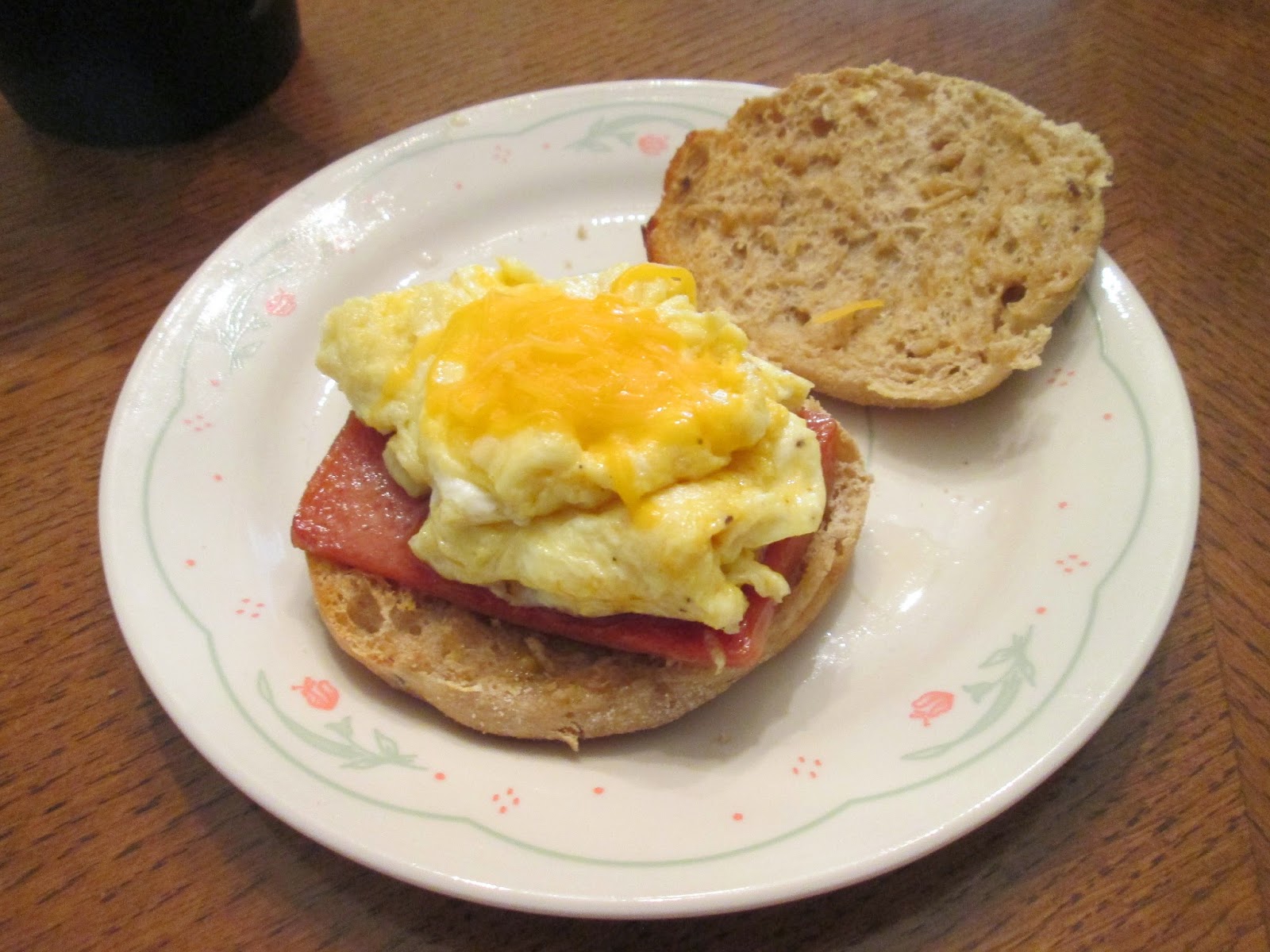
Mother Nature cranked the humidity up on us today, quite humid out. Started the day off with some Jennie- O Bacon, Scrambled Egg, and Toasted whole Grain Bread. Very good way to start the day. A bit humid to get the cart out today but I had it out and did a little maintenance and cleaning on it. Still not quite up to par, those Phantom Pains really took it out of me. For dinner tonight a new one from one of my favorite sites Cooking with a Wallflower. A really super site with some great recipes. I prepared Creamy Shrimp and Corn Stuffed Portobello Mushrooms.


The minute I seen this recipe I couldn't wait to give it a try! Mushrooms, Cream Cheese, Corn, Cheese, Shrimp, What is not to like in this recipe! To prepare it I'll need; 2 Large Portobello Mushrooms, 1/2 Cup Philadelphia (Fat Free), 1 Cup Raw Shrimp (Medium Size), 1/3 Cup Corn Kernels ( I used Green Giant Steam Crisp Super Sweet Yellow and White Whole Kernel Corn), 1/2 Cup Sargento Reduced Fat Shredded Sharp Cheddar Cheese, 1/2 Teaspoon Creole Seasoning, 1/4 Teaspoon Garlic Powder, and Extra Cheese and Parsley Flakes for topping.


To prepare it I preheated the oven to 350 degrees. Lined a a small baking sheet with foil and sprayed it with Pam Cooking Spray. Removed the stems from the Portobellos. Placed them on the baking sheet and bake them for about 5 minutes, just to soften them up a bit. Remove from the oven and set aside. Now in an medium size skillet on medium heat, I add a tablespoon of Extra Virgin Olive Oil. When the oil is heated I add my Shrimp, turning them once. Cook until they start turning that red-orange color. Remove them from the heat and let them cool until you can touch them. When cooled a bit I minced them into small pieces. I kept 5 of them out to eat with the dinner. At the same time the Shrimp is cooking I heated up the corn on medium high for about 6 minutes.


Ready for the oven!

Then in a medium size bowl add the Minced Shrimp, Corn, Cream Cheese, Creole Seasoning, and Garlic Powder all together. Softly mix and fold until well mixed. Put the Mushrooms back on the baking sheet, then spoon the Shrimp and Corn Mix into the Portobella Mushrooms and top with the Sharp Cheddar Cheese and Parsley Flakes. Bake them then for 4-5 minutes or until the Cheese has melted. Remove from the oven, let them cool just a bit, and then enjoy!! These are just flat out delicious. You've got the Minced Shrimp, the sweetness of the Sweet Corn, and all the creaminess of the Philly Cream Cheese and Cheddar Cheese. Like I said delicious! I served them with a side of the cooked Shrimp with a bit of Louisiana Remoulade Sauce, my favorite Remoulade Sauce. These make a great light meal or even a perfect appetizer. This is one of those Keeper Recipes! You could use Lobster  Meat instead of Shrimp for another version of this, I'll have to try it this way also. I left the link to the original recipe at the end of the post. While at the Cooking with a Wallflower site check out all the fantastic recipes! For dessert later a Jello Sugar Free Dark Chocolate Mousse.


Cooking with a Wallflower

Creamy Shrimp and Corn Stuffed Portobello Mushrooms

http://cookingwithawallflower.com/2014/06/22/creamy-shrimp-and-corn-stuffed-portobello-mushrooms/

Monday, July 7, 2014

One of America's Favorites - Cream Cheese

Cream Cheese

Cream cheese is a soft, mild-tasting cheese with a high fat content. Stabilizers such as carob bean gum and carrageenan are added.

The U.S. Department of Agriculture defines the dairy product as containing at least 33% milk fat (as marketed) with a moisture content of not more than 55%, and a pH range of 4.4 to 4.9. In other countries, it is defined differently and may need a considerably higher fat content.

Cream cheese is not naturally matured and is meant to be consumed fresh, and so it differs from other soft cheeses such as Brie and Neufchâtel. It is more comparable in taste, texture and production methods to Boursin and Mascarpone.


Early prototypes of cream cheese were referenced in England as early as 1583 and in France as early as 1651. Recipes are recorded soon after 1754, particularly from Lincolnshire and the southwest of England.


In the United States - Recipes for the making of cream cheese can be found in US cookbooks and newspapers beginning in the mid-eighteenth century. By the second decade of the 19th century, Philadelphia and its environs had gained a reputation for this cheese. The cheese, however, was produced on family farms and so quantities for distribution were small. Around 1873, William A. Lawrence, a Chester, NY, dairyman, was the first to mass-produce cream cheese. In 1873 he purchased a Neufchatel factory and shortly thereafter, by adding cream to the process, was able to create a richer cheese, that he called “cream cheese”. In 1877 he created the first brand for cream cheese: the silhouette of a cow followed by the words: Neufchatel & Cream Cheese. In 1879, in order to create a larger factory, Lawrence partnered with a Chester merchant, Samuel S Durland. In 1880, Alvah L Reynolds, a New York cheese distributor, began to sell the cheese of Lawrence & Durland and created a brand name for it: Philadelphia Cream Cheese. Reynolds chose the name based on the reputation Philadelphia had for such cheese. By the end of 1880, faced with increasing demand for his Philadelphia brand, Reynolds turned to Charles Green, a second Chester dairyman, who, by 1880, had been manufacturing cream cheese. Some of Green’s cheese was, now, also sold under the Philadelphia label. In 1892, Reynolds bought the Empire Cheese Co. of South Edmeston, NY to produce cheese under his Philadelphia label.

When that burned down in 1900, he turned, the following year, to the newly formed Phenix Cheese Co. to produce his cheese. In 1903, Reynolds sold the rights to his Philadelphia brand to Phenix (which merged with Kraft in 1928). By the early 1880s, in addition to Philadelphia brand, was Star, a second cream cheese brand of Lawrence & Durland, and Green’s World and Globe brands. At the turn of the 19th century, New York dairymen were producing cream cheese for a number of other brands: Double Cream (C. Percival); Eagle (F.X. Baumert); Empire (Phenix Cheese Co.); Mohican (International Cheese Co.); Monroe Cheese Co. (Gross & Hoffman); and Nabob (F.H. Legget).


Cream cheese on a bagel

Cream cheese is often spread on bread, bagels, crackers, etc., and used as a dip for potato chips and similar snack items, and in salads. It can be mixed with other ingredients to make spreads, such as yogurt-cream spread (1.25 parts cream cheese, 1 part yogurt, whipped).

Cream cheese can be used for many purposes in sweet and savoury cookery, and is in the same family of ingredients as other milk products, such as cream, milk, butter, and yogurt. It can be used in cooking to make cheesecake and to thicken sauces and make them creamy. Cream cheese is sometimes used in place of or with butter (typically two parts cream cheese to one part butter) when making cakes or cookies, and cream cheese frosting. It is the main ingredient in crab rangoon, an appetizer commonly served at US Chinese restaurants. It can also be used instead of butter or olive oil in mashed potatoes. It is also commonly used in some western-style sushi rolls.

American cream cheese tends to have lower fat content than elsewhere, but "Philadelphia" branded cheese is sometimes suggested as a substitute for petit suisse.


Cream cheese is easy to make at home, and many methods and recipes are used. Consistent, reliable, commercial manufacture is more difficult. Normally, protein molecules in milk have a negative surface charge, which keeps milk in a liquid state; the molecules act as surfactants, forming micelles around the particles of fat and keeping them in emulsion. Lactic acid bacteria are added to pasteurized and homogenized milk. During the fermentation at around 22 °C (72 °F),[citation needed] the pH of the milk decreases (it becomes more acidic). Amino acids at the surface of the proteins begin losing charge and become neutral, turning the fat micelles from hydrophilic to hydrophobic state and causing the liquid to coagulate. If the bacteria are left in the milk too long, the pH lowers further, the micelles attain a positive charge and the mixture returns to liquid form. The key, then, is to kill the bacteria by heating the mixture to 52–63 °C (126–145 °F)[citation needed] at the moment the cheese is at the isoelectric point, meaning the state at which half the ionizable surface amino acids of the proteins are positively charged and half are negative.

Inaccurate timing of the heating can produce inferior or unsalable cheese due to variations in flavor and texture. Cream cheese has a higher fat content than other cheeses, and fat repels water, which tends to separate from the cheese; this can be avoided in commercial production by adding stabilizers such as guar or carob gums to prolong its shelf life.

In Spain and Mexico, cream cheese is sometimes called by the generic name queso filadelfia, following the marketing of Philadelphia branded cream cheese by Kraft Foods.


Monday, May 7, 2012

Kiwi - Lemon Cheesecake

Kiwi - Lemon Cheesecake

Came across this recipe in a Every Day Rachael Ray magazine and my Mom wanted to try it and what Mom wants Mom Gets! It really came out good! The Kiwi, Lemon Curd, and Philly Cream Cheese make a great trio. I used Philly No Fat Cream Cheese and a Keebler Graham Cracker Pie Shell.

Ingredients:

11 oz. Jar of Lemon Curd
4 oz. Cream Cheese, softened
1 Store bought Graham Cracker Pie crust

Directions:

*Using an electric mixer, whip Lemon Curd and Cream Cheese until doubled in size, 3 minutes.
*Spoon into pie crust; freeze 10 minutes. Meanwhile, peel Kiwis, halve lengthwise and thinly slice. Scatter over filling.
*Refrigerate until ready to serve. (Serves 6 )

http://www.rachaelraymag.com/

Friday, April 6, 2012

Turkey Burger w/ Twice Warmed Potato

Dinner Tonight: Turkey Burger w/ Twice Warmed Potato


At dinner tonight I had a Turkey & Swiss Burger. I used Jennie - O Extra Lean Ground Turkey (99/1 and 120 calories o carbs). It's hard to beat Jennie - O Ground Turkey for freshness. I seasoned it with Sea Salt and Ground Black Pepper. Fried in Extra Virgin Olive Oil about 4 1/2 to 5 minutes per side. Topped it with a slice of Sargento Ultra Thin Swiss Cheese and served on a Healthy Life Whole Grain Bun.

For a side tried a new recipe, Twice Warmed Potato. They really came out good and their almost a meal in their self. Easy to fix and a little time consuming putting it all together but well worth it! All you need is a large baking Potato, 2 Tbsp. PHILADELPHIA Chive & Onion  Cream Cheese Spread, 2 Tbsp. Daisy Light Sour Cream, and 1/4 cup Sargento Shredded Reduced Fat Cheddar - Jack Cheese, divided. Microwave your potatoes for 7 or so minutes, scoop out the flesh of the potatoes and add your ingredients and mix. Then scoop it back into your potatoes and bake 10 minutes at 40 degrees. You then have one delicious Twice Warmed Potato! I'm going to try this one again sometime soon and add some Turkey Chili to it. I left the recipe below. For dessert later sticking to the fruit tonight. A Mini Banana and a couple of slices of a Gala Apple. 


Twice Warmed Potatoes

Ingredients:

1 large baking potato (10 oz.)
2 Tbsp. PHILADELPHIA Chive & Onion Cream Cheese Spread
2 Tbsp. Daisy Light Sour Cream
1/4 cup Sargento Shredded Reduced Fat Cheddar - Jack Cheese, divided

Directions:

*HEAT oven to 400ºF.

*PRICK potato in several places with fork. Microwave on HIGH 7 to 8 min. or until tender.

*CUT potato lengthwise in half. Scoop flesh into bowl, leaving thin shells; mash potato flesh with cream cheese spread, sour cream and 2 Tbsp. Cheese. Spoon into shells; sprinkle with remaining Cheddar.

*BAKE 10 min. or until cheese is melted and potatoes are heated through.

Sunday, December 11, 2011

Cheese 'n Bacon Stuffed Mushrooms

  Came across this recipe for Stuffed Mushrooms. The prepared recipe is only 70 calories and I even lowered that by using fat free and reduced ingredients. They turned out delicious!

Cheese 'n Bacon Stuffed Mushrooms 

Ingredients:

    12 large fresh mushrooms (1 lb.)
    4 oz.  (1/2 of 8-oz. pkg.) PHILADELPHIA Fat Free Cream Cheese, softened
    1 clove Garlic, minced
    4 slices  OSCAR MAYER Turkey Bacon, cooked, crumbled
    1/2 cup KRAFT 2% Shredded Sharp Cheddar Cheese
    1 Tbsp.  chopped fresh Parsley
   
Directions:

    HEAT oven to 350°F.

    REMOVE stems from mushrooms; discard or reserve for another use.

    MIX remaining ingredients; spoon into mushroom caps. Place, filled-sides up, in shallow baking dish.

    BAKE 18 to 20 min. or until heated through.
    Kraft Kitchens Tips
    Variation
    Prepare using PHILADELPHIA Neufchatel Cheese, OSCAR MAYER Turkey Bacon and KRAFT 2% Milk Shredded Cheddar Cheese.
    Special Extra
    Sprinkle with paprika before baking.
    nutritional information
    per serving

    
    Calories
     70
    Total fat
     6 g
    Saturated fat
     3.5 g
    Cholesterol
     20 mg
    Sodium
     115 mg
    Carbohydrate
     1 g
    Dietary fiber
     0 g
    Sugars
     1 g
    Protein
     3 g