Showing posts with label Oats. Show all posts

Sunday, February 17, 2019

Healthy Overnight Oatmeal Recipes

From the EatingWell website and Magazine its Healthy Overnight Oatmeal Recipes. Time saving and delicious Healthy Overnight Oatmeal Recipes with recipes like; Peanut Butter-Chocolate Chip Overnight Oats with Banana, Peanut Butter Protein Overnight Oats, and Savory Curry-Cashew Overnight Oats. So find these recipes and more all at the EatingWell website. Enjoy and Make 2019 a Healthy One!  http://www.eatingwell.com/

Healthy Overnight Oatmeal Recipes
Find healthy, delicious overnight oatmeal recipes, from the food and nutrition experts at EatingWell.


Peanut Butter-Chocolate Chip Overnight Oats with Banana
It takes just a few minutes to prepare these overnight oats and you will be all set with 4 packable healthy breakfasts to enjoy throughout the week. Use whatever milk you have on hand for this easy meal-prep breakfast recipe...........


Peanut Butter Protein Overnight Oats
Powdered peanut butter is a handy pantry staple that makes a great vegan protein booster for oatmeal and smoothies. Double or triple this recipe to meal-prep breakfasts for the week or to have breakfast ready for the entire family.......


Savory Curry-Cashew Overnight Oats
If you think oatmeal can only be sweet, this savory oats recipe will change your mind. Rich curry powder pairs perfectly with nutty cashews and sweet-tart raisins for a unique whole-grain breakfast (or dinner!)...........


* Click the link below to get all the Healthy Overnight Oatmeal Recipes
http://www.eatingwell.com/recipes/21919/mealtimes/breakfast-brunch/cereals/oatmeal/overnight/

Friday, December 14, 2018

Hannah's Meatloaf Sandwich

I have a second Jennie - O Turkey Meatloaf recipe I'm passing along to every one, Hannah's Meatloaf Sandwich. Sometimes a Meatloaf Sandwich is tastier than the original Meatloaf! This one uses the JENNIE-O® Lean Ground Turkey also. Some of the other ingredients you'll need is; Red Bell Pepper, White Onion, Oats, and Spices. Then topped with some Chipotle Pepper Adobo Sauce and served on Whole Wheat Sandwich Thins. It's only 270 calories and 26 net carbs per serving! You can find this recipe along with all the other Delicious and Healthy Recipes at the Jennie - O Turkey website. So Enjoy and Make the SWITCH in 2018!  https://www.jennieo.com/

Hannah's Meatloaf Sandwich
One bite of this meatloaf sandwich and you’ll wonder how you’ve managed to go this long without it. under 300 calories per serving.

INGREDIENTS
1 (16-ounce) package JENNIE-O® Lean Ground Turkey
1 red bell pepper, finely diced
½ green bell pepper, finely diced
1 cup finely diced white onion
¾ cup old fashioned oats, uncooked
2 tablespoons minced garlic
1 tablespoon onion powder
½ package dry onion soup mix
2 tablespoons Worcestershire sauce
¼ cup unsweetened applesauce
½ cup ketchup, divided
6 whole wheat sandwich thins
mustard, if desired
celery leaves, if desired

DIRECTIONS
1) Heat oven to 350°F. In medium bowl, mix turkey, bell peppers, onion, oats, garlic, onion powder, onion soup mix, Worcestershire sauce, applesauce and ¼-cup ketchup. Mold into 9 x 5 x 3-inch loaf pan.
2) Bake 1 hour 30 minutes or until the internal temperature is 165°F as measured by a meat thermometer. Remove from oven and top with remaining ¼-cup ketchup. Turn oven temperature to broil. Broil meatloaf 3 to 4 minutes to glaze ketchup topping.
3) Slice and serve on whole wheat sandwich thins. Add mustard and celery leaves, if desired.
* Always cook to an internal temperature of 165°F.

RECIPE NUTRITION INFORMATION
PER SERVING

Calories 270
Protein 18g
Carbohydrates 29g
Fiber 3g
Sugars 18g
Fat 8g
Cholesterol 55mg
Sodium 230mg
Saturated Fat 2g
https://www.jennieo.com/recipes/519-hannahs-meatloaf-sandwich

Saturday, June 9, 2018

Kitchen Hint of the Day!

Thicken the stew...............


An easy method of thickening stews, soups, or creamed vegetables is to add a small amount of quick-cooking oats, a grated potato,or some instant potatoes. Never add flour directly, as it will clump. However, you can mix the flour with melted butter and add that mixture to your dish.

Monday, February 5, 2018

One of America's Favorites - Goeta

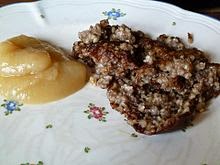
Goetta sandwich
Goetta is a meat-and-grain sausage or mush of German inspiration that is popular in the greater Cincinnati area. It is primarily composed of ground meat (pork, or pork and beef), pin-head oats and spices. Pronounced gétt-aa, ged-da or get-uh in Americanized pronunciation, and gutta in the Low German pronunciation, this dish probably originated with German settlers from the northwestern regions of Oldenburg, Hannover, and Westphalia who emigrated to the Cincinnati and Dayton area in the 19th century. The word "Goetta" comes from the Low German word Grötte. North of Cincinnati, specifically in the region surrounding Darke, Mercer, Shelby, and Auglaize counties, goetta is often known by the term "grits", not to be confused with hominy grits. This usage of the word "grits" stems from the High German word "Grütze," which is an equivalent of the Low German Grötte.

Goetta was originally a peasant dish, meant to stretch out servings of meat over several meals to conserve money.

Glier's Goetta, the largest commercial producer of goetta, produces more than 1,000,000 lb annually, around 99 percent of which is consumed locally in Greater Cincinnati.


While goetta comes in a variety of forms, all goetta is based around ground meat combined with pin-
A conventional log of Goetta
head or steel-cut oats, the "traditional Low German cook's way of stretching a minimum amount of meat to feed a maximum number of people."Usually goetta is made from pork shoulder or "Cali", but occasionally contains equal parts pork and beef. Goetta is typically flavored with bay leaves, rosemary, salt, pepper, and thyme. It contains onions and sometimes other vegetables.

While similar to scrapple in that it uses a grain product for the purpose of stretching out meat to feed more people, goetta looks very different. Scrapple is made with cornmeal while goetta uses steel-cut or chopped oats. The oats in goetta are much coarser than the fine powder used in scrapple and add texture to the dish.


Goetta is typically formed into small loaves, and then cut into slices and fried, often in butter. Traditionally goetta is served as a breakfast food.


A number of commercial distributors produce and sell Goetta in the parts of Ohio, Kentucky, and Indiana near Cincinnati. Glier's is the largest producer of goetta in the world. Glier's Goetta, established in 1946, is based in Covington, Kentucky, part of the greater Cincinnati area.Queen City Sausage is the next largest producer, while multiple small and artisanal producers also make Goetta in and around Cincinnati.


"Glier's Goettafest" is an annual culinary festival held in August near Newport, Kentucky's "Newport on the Levee"(an entertainment, shopping and restaurant complex) on the Ohio River waterfront. The festival celebrates both the dish and Greater Cincinnati's German American heritage. While the main focus of the festival is goetta served in many different ways, it also typically includes music, dancing, and other public entertainment.


Glier's markets goetta as the "German Breakfast Sausage," which may create the impression that it is
Goetta is usually sold in logs but links are available also.
something commonly eaten for breakfast in Germany. In fact, the vast majority of Germans have never heard of goetta. However, a similar product known as Knipp can be found in the present day in Bremen and surrounding areas. This can be spread onto bread or pan fried like goetta. It is also often served with apple sauce, paralleling the apple butter which is served alongside goetta. Although in modern times in most parts of Germany, eating warm sausage for breakfast or a hot breakfast in general is not common, historically Knipp was eaten for breakfast, often in the winter.


Tuesday, January 23, 2018

Diabetic Dish of the Week - MEXICAN MEATBALL KABOBS

This week's Diabetic Dish of the Week is - MEXICAN MEATBALL KABOBS. Ground Beef, Bell Peppers, and seasoning go in to make this week's recipe. It's from one of my favorite recipe websites the Diabetic Gourmet Magazine website. At the site you'll find a huge selection of Diabetic Friendly Recipes along with Diabetic Management tips, Diabetic News, and more. So check it out today. Enjoy and Eat Healthy in 2018!  https://diabeticgourmet.com/

MEXICAN MEATBALL KABOBS

Ingredients
Nonstick cooking spray
3 pounds lean ground beef
2 cups quick oats
1 can (12 fluid ounces) Nestlé Carnation Evaporated Milk
2 large eggs
1/2 cup ketchup
2 packets (1.25 ounces each) taco seasoning mix
1 teaspoon ground black pepper
3 large bell peppers (any color), cut into 60, 1-inch pieces
60 4-inch wooden skewers
Salsa and sour cream (optional)
Directions

1 - Preheat oven to 350F. Foil-line 3 baking sheets and spray with nonstick cooking spray.
2 - Combine ground beef, oats, evaporated milk, eggs, ketchup, taco seasoning and black pepper in large bowl until just mixed. Form mixture into 120, 1-inch meatballs. Place on prepared baking sheets.
3 - Bake for 15 to 20 minutes or until no longer pink in center. Drain on paper towels, if needed.
4 - Thread two meatballs and one piece of pepper on each skewer. Place on large serving platter. Serve with salsa and sour cream.


Recipe Yield: Yield Makes 30 servings, 2 skewers each

NUTRITIONAL INFORMATION PER SERVING:
Calories: 110
Fat: 1.5 grams
Saturated Fat: 1.5 grams
Fiber: 1 grams
Sodium: 260 milligrams
Cholesterol: 40 milligrams
Protein: 11 grams
Carbohydrates: 8 grams
Sugars: 3 grams
https://diabeticgourmet.com/diabetic-recipes/mexican-meatball-kabobs

Thursday, September 14, 2017

It's Nuts I tell you.......HONEY GONE NUTS GRANOLA


This week from the nuts.com website (https://nuts.com/) its HONEY GONE NUTS GRANOLA. Healthy and Delicious HONEY GONE NUTS GRANOLA. Made with almonds, cashews, sesame seeds, sunflower seeds, and walnuts. Topped with  vanilla and honey. This is just one of many items that you can find at the Nuts site. You can choose from items like; NUTS, DRIED FRUIT, CHOCOLATES and SWEETS, SNACKS, COFFEE and TEA, COOKING and BAKING, and GIFTS. Plus there's FREE shipping on orders over $59, see for details. So be sure to check out the nuts.com website today (https://nuts.com/)


HONEY GONE NUTS GRANOLA
This fresh and crunchy granola is healthy and ever so tasty. We take rolled oats and blend them with
almonds, cashews, sesame seeds, sunflower seeds, and walnuts. Then we add a touch of vanilla and honey for an unbelievable taste and crunch. Tastes great as a snack or with cereal , yogurt, and ice cream.

Ingredients
Rolled oats, Honey, Canola Oil, Almonds, Coconut, Sunflower Seeds, Molasses, Walnuts, Sesame Seeds, Cashews, Water, Salt, Natural Flavor. Packaged in the same facility as peanuts, tree nuts, wheat, soy, and milk products.

Nutrition Facts
Serving size 60g (~2.1 oz.)

Amount per serving
Calories 250
Calories from Fat 100
%DV
Total Fat 11g 17%
Saturated Fat 2g 10%
Cholesterol 0mg 0%
Sodium 50mg 2%
Total Carbohydrate 36g 12%
Dietary Fiber 5g 20%
Sugars 10g
Protein 7g
Vitamin A 0%
Vitamin C 0%
Calcium 4%
Iron 15%

Storage
Store in a cool dry place for up to 6 months. It is ok to refrigerate.
https://nuts.com/snacks/granola/honey-gone-nuts.html


Order securely online or call us:
800-558-6887 or 908-523-0333
https://nuts.com/

Tuesday, May 2, 2017

Diabetic Dish of the Week - Miniature Apple Muffins

This week's Diabetic Dish of the Week is Miniature Apple Muffins. It's from the Diabetic Gourmet Magazine website. The Dish has 100 calories and 11 carbs per serving. So check out the site for delicious and diabetic friendly recipes along with tips and Diabetic News. Enjoy and Eat Healthy! http://diabeticgourmet.com/


Miniature Apple Muffins

With the right amount of spice and a sprinkling of raisins, these bite-size muffins have the flavor of an old-fashioned apple cake.

Ingredients

3/4 cup Splenda No Calorie Sweetener, Granulated
1 cup butter, softened
2 teaspoons molasses
2 large eggs
1/3 cup apple juice concentrate, thawed
2 teaspoons grated fresh lemon peel
2 cups all-purpose flour
2 teaspoons ground cinnamon
1 teaspoon ground nutmeg
1 teaspoon baking soda
1/2 teaspoon salt
1 cup peeled, shredded fresh apple
2/3 cup old-fashioned oats
1/2 cup raisins
Directions

Preheat oven to 400 degrees F. Lightly spray miniature muffin pans with vegetable cooking spray; set aside.
Beat Splenda Granulated Sweetener, butter, and molasses at medium speed of an electric mixer 1 minute or until blended. Add eggs, one at a time, beating until blended after each addition; add apple juice concentrate and lemon peel, beating until blended.
Combine flour, cinnamon, nutmeg, soda, and salt; add to Splenda Granulated Sweetener mixture, beating on low speed just until blended. Stir in apple, oats, and raisins.
Spoon batter into prepared pans; filling three-fourths full. Bake until edges are lightly browned, 12 minutes. Remove to wire racks to cool.
Nutritional Information (Per Serving)
Calories: 100
Protein: 2g
Sodium: 125 mg
Cholesterol: 25 mg
Fat: 6g
Saturated Fat: 3.5g
Dietary Fiber: 1g
Sugars: 4g
Carbohydrates: 11g
http://diabeticgourmet.com/recipes/html/1120.shtml

Tuesday, November 1, 2016

Mushroom Veggie Burger

Here's a Mushroom Veggie Burger to go with those Spicy Baked Sweet Potato Fries!

Mushroom Veggie Burger

Ingredients
2 tablespoons light olive oil
3 (8 ounce) packages sliced fresh mushrooms
1/2 onion, finely chopped
4 cloves garlic, minced
1 teaspoon sea salt
1/2 teaspoon black pepper
1/2 teaspoon dried oregano
1/4 teaspoon dried thyme
1/4 teaspoon ground nutmeg
2/3 cup rolled oats
3/4 cup dry bread crumbs
2 eggs, beaten
1/2 cup freshly shredded Parmigiano-Reggiano cheese
2 tablespoons light olive oil


Directions
1 - Heat 2 tablespoons olive oil in a large skillet over medium heat; add mushrooms, onion, and garlic to the hot oil and season with salt, black pepper,oregano, thyme, and nutmeg. Cook and stir mushroom mixture until mushrooms have given up their juice and the juice has almost evaporated, about 10 minutes. Transfer cooked mushrooms to a cutting board and chop into small chunks with a knife.
2 - Transfer mushrooms to a large bowl. Mix in rolled oats and bread crumbs; taste for salt and black pepper and add more to taste. Stir Parmigiano-Reggiano cheese into the mixture, followed by eggs. Let mixture stand for the crumbs to soak up excess liquid, about 15 minutes. (At this point you can refrigerate the mixture to cook later if desired.) Moisten hands with a little vegetable oil or water, pick up about 1/4 cup of mixture, and form into burgers.
3 - Heat remaining 2 tablespoons olive oil in a skillet over medium heat and pan-fry burgers until browned and cooked through, 5 to 6 minutes.

Saturday, September 10, 2016

The Saturday Evening Dessert - Peanut Butter Granola Bites

For this week's Saturday Evening Dessert its Peanut Butter Granola Bites. A high fiber cookie that has; Chunky peanut butter, cornflakes, oats, raisins , honey, and Equal. You can find this recipe on several sites but I'm going with the one on the CooksRecipes. I love the Cooks website, its loaded with recipes to suit all tastes and cuisines, check it out soon!  http://www.cooksrecipes.com/index.html

Peanut Butter Granola Bites

A hearty cookie filled with lots of fiber and good flavor. Chunky peanut butter, cornflakes, oats and raisins provide the fiber; a hint of honey and cinnamon the other great flavors.

Recipe Ingredients:

2 cups cornflakes
1 cup quick oats, uncooked
2/3 cup seedless raisins
1/2 cup chunky peanut butter
1/2 cup egg substitute or 4 large egg whites
1 cup Equal® Spoonful*
1 tablespoon honey
2 teaspoons vanilla extract
1 teaspoon ground cinnamon

Cooking Directions:

1 - Combine cornflakes, oats and raisins in large bowl.
2 - Combine peanut butter and egg substitute in medium bowl. Stir in Equal®, honey, vanilla and cinnamon until well blended. Spoon over cereal mixture. Toss gently to combine. Let stand 5 minutes.
3 - Preheat oven to 350°F (175°C).
4 - Shape mixture into 1-inch balls. Place on lightly sprayed baking sheet.
5 - Bake 8 to 10 minutes or until light golden and dough is set. Remove from baking sheet and cool completely on wire rack.
6 - Store in airtight containers at room temperature.
Makes 30 servings.

*May substitute 24 packets Equal sweetener

Nutritional Information Per Serving (1/30 of recipe; 1 cookie): calories 56, protein 2 g, carbohydrate 8 g, fat 2 g, cholesterol 0 mg, sodium 42 mg.

http://www.cooksrecipes.com/diabetic/peanut_butter_granola_bites_recipe.html

Tuesday, September 15, 2015

Harvest Pumpkin-Oatmeal Raisin Cookies

This recipe has Autumn written all over it, Harvest Pumpkin-Oatmeal Raisin Cookies. It's from one of my favorite recipe sites the CooksRecipes website.  http://www.cooksrecipes.com/index.html


Harvest Pumpkin-Oatmeal Raisin Cookies

A healthy pumpkin cookie delicious not only at harvest time, but any time of the year.

Recipe Ingredients:

2 cups all-purpose flour
1 1/3 cups quick or old-fashioned oats
1 teaspoon baking soda
1 teaspoon ground cinnamon
1/2 teaspoon salt
1 cup butter or margarine, softened
1/2 cup Splenda® Sugar Blend
1/2 cup Splenda® Brown Sugar Blend, packed
1 cup LIBBY’S® 100% Pure Pumpkin
1 large egg
1 teaspoon vanilla extract
3/4 cup chopped walnuts
3/4 cup raisins

Cooking Directions:

Preheat oven to 350°F (175°C). Spray baking pans with nonstick cooking spray; set aside.
Combine flour, oats, baking soda, cinnamon and salt in medium bowl. Beat butter, Splenda® Sugar Blend and Splenda® Brown Sugar
Blend in large bowl at medium speed until light and fluffy. Add pumpkin, egg and vanilla extract; mix well. Add flour mixture; mix well. Stir in walnuts and raisins. Drop by rounded tablespoons onto prepared baking sheets.
Bake 14 to 16 minutes or until cookies are lightly browned and set in centers. Cool on baking sheets for 2 minutes; remove to wire racks to cool completely.
Makes 48 cookies.

Nutritional Information Per Serving (1/48 of recipe; 1 cookie): Calories 110 | Calories from Fat 50 | Fat 5.0g (sat 2.5g) | Cholesterol 15mg | Sodium 90mg | Carbohydrates 12g | Fiber 1g | Sugars 6g | Protein 2g.

http://www.cooksrecipes.com/diabetic/harvest_pumpkin-oatmeal_raisin_cookies_recipe.html

Wednesday, November 19, 2014

Kitchen Hint of the Day!

An easy method of thickening stews, soups, or creamed vegetables is to add a small amount of quick-cooking oats, a grated potato, or some mashed potatoes. Never add flour directly, as it will clump. However, you can mix flour with melted butter and add the mixture to your dish.

Monday, May 19, 2014

One of America's Favorites - Goetta

A conventional log of Goetta

Goetta is a breakfast sausage of likely German-American origin that is popular in the greater Cincinnati area. It is primarily composed of ground meat (pork, or pork and beef), pin-head oats and spices. Pronounced gétt-aa, ged-da or get-uh Americanized pronunciation, this dish probably originated with German settlers from the northwestern regions of Oldenburg, Hannover, and Westphalia who emigrated to the Cincinnati area in the 19th century. The word "Goetta" comes from the Low German word götte. North of Cincinnati, specifically in the region surrounding Mercer, Shelby, and Auglaize counties, goetta is often known by the term "grits", not to be confused with hominy grits. This usage of the word "grits" stems from the High German word "grütze," which is an equivalent of the Low German götte.

Goetta was originally a peasant dish, meant to stretch out servings of meat over several meals to conserve money.

Glier's Goetta, the largest commercial producer of goetta, produces more than 1,000,000 lb (450 metric tons) annually, around 99% of which is consumed locally in greater Cincinnati.


Goetta Links are being sold in Greater Cincinnati supermarkets


While goetta comes in a variety of forms, all goetta is based around ground meat combined with pin head or steel cut oats. Usually goetta is made from pork shoulder or "Cali", but occasionally contains equal parts pork and beef. Goetta is typically flavored with bay leaves, rosemary, salt, pepper, and thyme. It contains onions and sometimes other vegetables.

While similar to scrapple in that it contains a grain product and meat for the purpose of stretching out the meat over several days, goetta looks very different. Scrapple is made with cornmeal while goetta uses steel-cut or chopped oats. The oats in goetta are much coarser than the fine powder used in scrapple and add texture to the dish.


Goetta is typically formed into small loaves, and then cut into squares and fried, often in the oil left over from browning the meats or in bacon drippings. Traditionally a breakfast food, goetta is often served with apple butter, ketchup, mustard, syrup, grape jelly, honey, or eaten by itself.

More recently, goetta has become an all purpose food eaten with any meal. New goetta products in the Cincinnati area include goetta burgers, goetta dogs, and goetta pizza. As the meat in goetta is precooked during the process of making the loaves, goetta can be kept in the freezer.


Due to the popularity of goetta in the Cincinnati metro area, a number of commercial distributors produce and sell it in the parts of Ohio, Kentucky, and Indiana near Cincinnati. The most popular of these brands is Glier's Goetta, the largest producer of goetta in the world. Glier's Goetta, established in 1946, is based in Covington, Kentucky, part of the greater Cincinnati area.


In the Greater Cincinnati area, there have been annual celebrations since 2004 with the central theme of Goetta.

The "Original Goettafest" is an annual cultural and culinary celebration held in Covington, Kentucky, just across the river from Cincinnati, Ohio. Covington has a rich heritage of German immigrants and this festival is held in MainStrasse Village, an area of Covington a few blocks from the Ohio River. In 2006, this celebration was held June 17 and 18.

"Glier's Goettafest" is a similar event held near Newport, Kentucky's "Newport on the Levee"(an entertainment, shopping and restaurant complex) on the Ohio River waterfront. The festival celebrates both the dish and Greater Cincinnati's German American heritage. While the main focus of the festival is goetta, served in many different ways, it also typically includes music, dancing, and other public entertainment. In 2013, the festival was held August 1 through 4.


A plate of pan-fried Knipp with apple sauce

Glier's markets Goetta as the "German Breakfast Sausage", creating the wrong impression that it is something commonly eaten for breakfast in Germany. In fact the vast majority of Germans have never heard of Goetta. However, an equivalent food known as Knipp can be found in the present day in Bremen and surrounding areas. This can be found spread onto bread or pan fried like goetta. It is also often served with apple sauce paralleling the apple butter which is served alongside goetta. Although in modern times in most parts of Germany, eating warm sausage for breakfast or a hot breakfast in general is not common, historically Knipp was eaten for breakfast, often in the winter.


Glier's Goetta

THIS IS GOETTA.
The patties begin to sizzle. The pin oats swell and pop. The spices throughout the gloriously married pork and beef infuse the atmosphere. And the corners of your brain turn up to a grin. While the crumbles dance in the hot pan, the rounds color to a golden brown, and your tongue puddles with anticipation. The final patty is flipped unveiling a brilliant batch of toasted treasures. The belly roars.

THIS IS GOETTA.
Your fork breaks the delicate crisp and moves carefully through the creamy middle of the morning circle. Every bite sends you deeper into total sensory engagement, and allows the mind to skip through the collection of stories that decorate your family’s history and your own. In a moment you are at your grandma’s counter enveloped in tales of her grandma’s kitchen. Your heart sings.

THIS IS GOETTA.
The pure enjoyment you draw from each tender-crisp forkful testifies to the power of passion. Your delight drives that passion. And the contribution of your experience makes richer the fabric that forms the heritage and legend. This is the end of boring breakfast. This is the return to what matters. The return to what inspires. The return to what is right and good and real and delicious.

THIS IS GOETTA.


www.goettacom.

Thursday, February 20, 2014

Grain of the Week - Oats

Oat plants

The common oat (Avena sativa) is a species of cereal grain grown for its seed, which is known by the same name (usually in the plural, unlike other grains). While oats are suitable for human consumption as oatmeal and rolled oats, one of the most common uses is as livestock feed. However, it is uncommon for ordinary people to consume them raw as animals do.


The wild ancestor of Avena sativa and the closely related minor crop, A. byzantina, is the hexaploid wild oat A. sterilis. Genetic evidence shows the ancestral forms of A. sterilis grew in the Fertile Crescent of the Near East. Domesticated oats appear relatively late, and far from the Near East, in Bronze Age Europe. Oats, like rye, are usually considered a secondary crop, i.e., derived from a weed of the primary cereal domesticates wheat and barley. As these cereals spread westwards into cooler, wetter areas, this may have favored the oat weed component, leading to its eventual domestication.


Oats are grown in temperate regions. They have a lower summer heat requirement and greater tolerance of rain than other cereals, such as wheat, rye or barley, so are particularly important in areas with cool, wet summers, such as Northwest Europe; they are even being grown in Iceland to help prolong the growing season.[3] Oats are an annual plant, and can be planted either in autumn (for late summer harvest) or in the spring (for early autumn harvest).
On the Indian subcontinent, oats (known locally in Hindi, Punjabi, Awadhi, Bhojpuri, and Nepali languages as "jaei"  are grown on the foothills of Himalayas, such as in the Indian state of Punjab, Uttar Pradesh and Bihar. References to its cultivation can be found in the epic Mahabharat.


Porridge oats before cooking

Oats have numerous uses in foods; most commonly, they are rolled or crushed into oatmeal, or ground into fine oat flour. Oatmeal is chiefly eaten as porridge, but may also be used in a variety of baked goods, such as oatcakes, oatmeal cookies, and oat bread. Oats are also an ingredient in many cold cereals, in particular muesli and granola. Oats may also be consumed raw, and cookies with raw oats are becoming popular.
Historical attitudes towards oats have varied. Oat bread was first manufactured in Britain, where the first oat bread factory was established in 1899. In Scotland, they were, and still are, held in high esteem, as a mainstay of the national diet.
In Scotland, a dish called cow pat was made by soaking the husks from oats for a week, so the fine, floury part of the meal remained as sediment to be strained off, boiled and eaten. Oats are also widely used there as a thickener in soups, as barley or rice might be used in other countries.
Oats are also commonly used as feed for horses when extra carbohydrates, and the subsequent boost in energy, are required. The oat hull may be crushed ("rolled" or "crimped") for the horse to more easily digest the grain,[citation needed] or may be fed whole. They may be given alone or as part of a blended food pellet. Cattle are also fed oats, either whole, or ground into a coarse flour using a roller mill, burr mill, or hammer mill.
Winter oats may be grown as an off-season ground cover and ploughed under in the spring as a green fertilizer, or harvested in early summer. They also can be used for pasture; they can be grazed a while, then allowed to head out for grain production, or grazed continuously until other pastures are ready.
Oat straw is prized by cattle and horse producers as bedding, due to its soft, relatively dust-free, and absorbent nature. The straw can also be used for making corn dollies. Tied in a muslin bag, oat straw was used to soften bath water.
Oats are also occasionally used in several different drinks. In Britain, they are sometimes used for brewing beer. Oatmeal stout is one variety brewed using a percentage of oats for the wort. The more rarely used oat malt is produced by the Thomas Fawcett & Sons Maltings, and was used in the Maclay Oat Malt Stout before Maclays Brewery ceased independent brewing operations. A cold, sweet drink called avena made of ground oats and milk is a popular refreshment throughout Latin America. Oatmeal caudle, made of ale and oatmeal with spices, was a traditional British drink and a favorite of Oliver Cromwell.
Oat extract can also be used to soothe skin conditions. It is the principal ingredient for the Aveeno line of products.
Oat grass has been used traditionally for medicinal purposes, including to help balance the menstrual cycle, treat dysmenorrhoea, and for osteoporosis and urinary tract infections.


Oats are generally considered "healthful", or a health food, being touted commercially as nutritious. The discovery of their healthy cholesterol-lowering properties has led to wider appreciation of oats as human food.


Oat bran is the outer casing of the oat. Its consumption is believed to lower LDL ("bad") cholesterol, and possibly to reduce the risk of heart disease.
Oats contain more soluble fiber than any other grain, resulting in slower digestion and an extended sensation of fullness. One type of soluble fibre, beta-glucans, has been proven to help lower cholesterol.

Oats are the only cereal containing a globulin or legume-like protein, avenalin, as the major (80%) storage protein. Globulins are characterised by solubility in dilute saline. The more typical cereal proteins, such as gluten and zein, are prolamines (prolamins). The minor protein of oat is a prolamine, avenin.
Oat protein is nearly equivalent in quality to soy protein, which World Health Organization research has shown to be equal to meat, milk, and egg protein. The protein content of the hull-less oat kernel (groat) ranges from 12 to 24%, the highest among cereals.


Oats are sown in the spring or early summer in colder areas, as soon as the soil can be worked. An early start is crucial to good yields, as oats go dormant in summer heat. In warmer areas, oats are sown in late summer or early fall. Oats are cold-tolerant and are unaffected by late frosts or snow.


Oat grains in their husks


Harvest techniques are a matter of available equipment, local tradition, and priorities. Farmers seeking the highest yield from their crops time their harvest so the kernels have reached 35% moisture, or when the greenest kernels are just turning cream-color. They then harvest by swathing, cutting the plants at about 10 cm (4 inches) above ground, and putting the swathed plants into windrows with the grain all oriented the same way. They leave the windrows to dry in the sun for several days before combining them using a pickup header. Finally, they bale the straw.
Oats can also be left standing until completely ripe and then combined with a grain head. This causes greater field losses as the grain falls from the heads, and to harvesting losses, as the grain is threshed out by the reel. Without a draper head, there is also more damage to the straw, since it is not properly oriented as it enters the combine's throat. Overall yield loss is 10–15% compared to proper swathing.
Historical harvest methods involved cutting with a scythe or sickle, and threshing under the feet of cattle. Late 19th- and early 20th-century harvesting was performed using a binder. Oats were gathered into shocks, and then collected and run through a stationary threshing machine.


After combining, the oats are transported to the farmyard using a grain truck, semi, or road train, where they are augered or conveyed into a bin for storage. Sometimes, when there is not enough bin space, they are augered into portable grain rings, or piled on the ground. Oats can be safely stored at 12% moisture; at higher moisture levels, they must be aerated, or dried.


In the United States, No.1 oats weigh 42 pounds per US bushel (541 kg/m3); No.3 oats must weigh at least 38 lb/US bu (489 kg/m3). If over 36 lb/US bu (463 kg/m3), they are graded as No.4, and oats under 36 lb/US bu (463 kg/m3) are graded as "light weight".
In Canada, No.1 oats weigh 42.64 lb/US bu (549 kg/m3); No.2 oats must weigh 40.18 lb/US bu (517 kg/m3); No.3 oats must weigh at least 38.54 lb/US bu (496 kg/m3) and if oats are lighter than 36.08 lb/US bu (464 kg/m3) they do not make No.4 oats and have no grade.
Note, however, that oats are bought and sold, and yields are figured, on the basis of a bushel equal to 32 pounds (14.5 kg or 412 kg/m3) in the United States and a bushel equal to 34 pounds (15.4 kg or 438 kg/m3) in Canada. Yields range from 60 to 80 US bushels per acre (5.2–7.0 m3/ha) on marginal land, to 100 to 150 US bushels per acre (8.7–13.1 m3/ha) on high-producing land. The average production is 100 bushels per acre, or 3.5 tonnes per hectare.
Straw yields are variable, ranging from one to three tons per hectare, mainly due to available nutrients, and the variety used (some are short-strawed, meant specifically for straight combining).