Showing posts with label ground mustard. Show all posts

Wednesday, June 8, 2011

Cincinnati Style Chili Cheese Coneys!

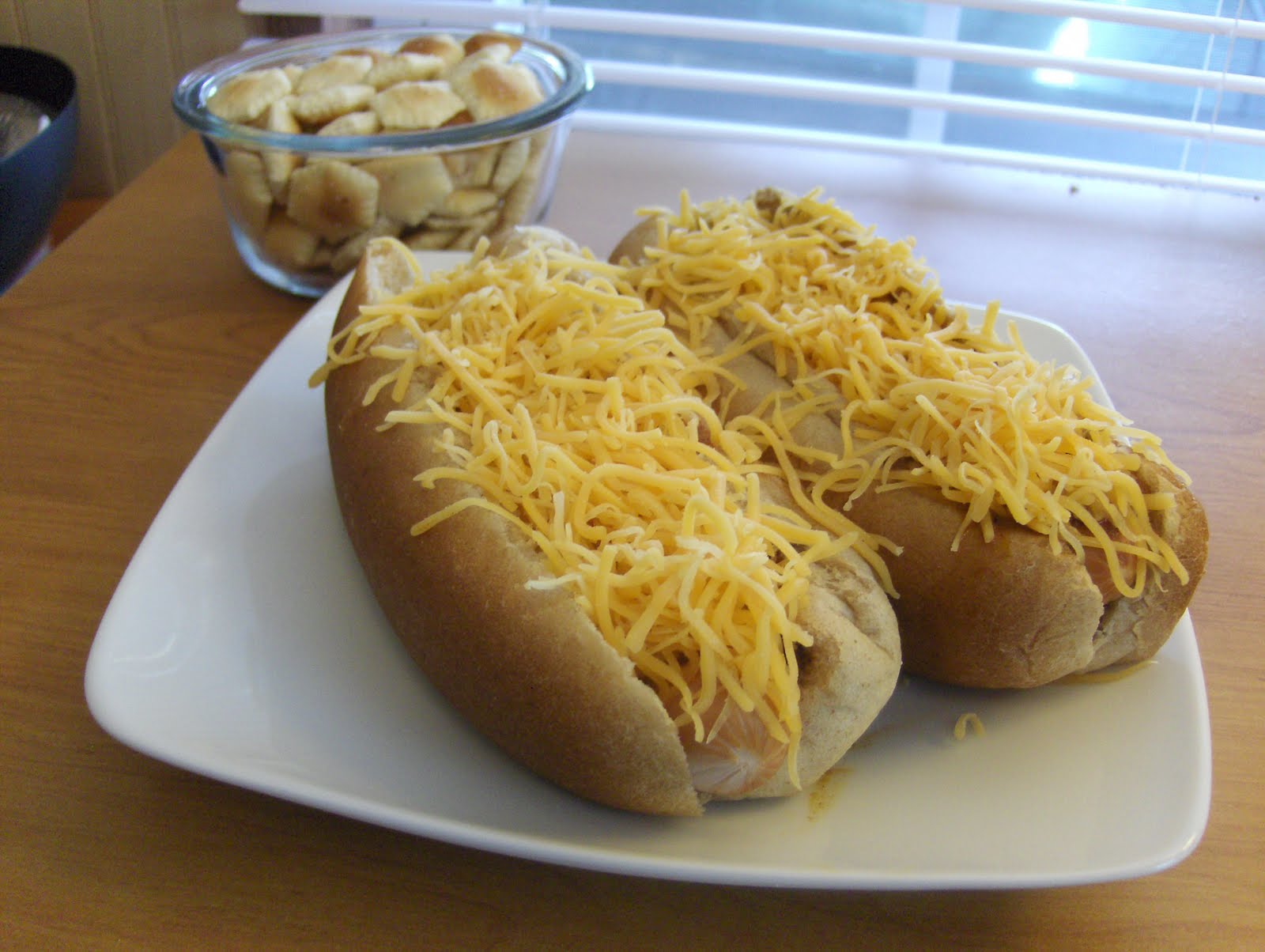
Dinner Tonight: Cincinnati Style Cheese Coneys

Oh yeah it's Coney night around the old homestead tonight! I used Ball Park White Smoked Turkey Franks, 1 Can of Skyline Chili, French's Mustard, Kraft 2% Shredded Sharp Cheese, and Healthy Life Hot Dog Buns. Put it all together and you have the Cincinnati Style Chili Cheese Coney. Had a few Oyster Crackers also, which is a must when having any type of chili. You can also add diced Onions to your Coneys if you like. All together makes a one fine dinner!

A little history of Cincinnati's Skyline Chili:
Skyline Chili is a chain of chili restaurants based in Cincinnati, Ohio. Founded in 1949 by Greek immigrant Nicholas Lambrinides, Skyline Chili is named for the view of Cincinnati's skyline that Lambrinides could see from his first restaurant (which has since been demolished), opened in the section of town now known as Price Hill.

Skyline Chili is unique in that it is not chili con carne, the meat dish that originated in (and is the state dish of) Texas. Instead, Cincinnati-style chili is a sauce usually used over spaghetti or hot dogs, containing a unique spice blend that gives it a very distinct taste. Officially, the recipe for Skyline Chili is a well-kept family secret among Lambrinides' surviving children. However, many Skyline patrons and Cincinnatians believe that the unique taste of Skyline Chili comes from chocolate and cinnamon, spices common in Greek cuisine's meat dishes. The general recipe is not unique to Skyline — "Cincinnati-style" chili is sold by several chili parlors in the area including Empress, Dixie, Gold Star Chili, Camp Washington, and other chili parlors.

Skyline's menu includes their signature dishes: cheese coneys (a hot dog topped with Skyline Chili, mustard, onions, and cheese), and 3-ways (spaghetti topped with Skyline Chili and cheese; 4-ways (choice of beans or onions added), and 5-ways (beans and onions both added). Additional menu items include burritos made with Skyline Chili, classic and Greek-style salads, french fries, and baked potatoes topped with Skyline Chili. To accommodate patrons who follow a low carbohydrate diet, Skyline has recently offered low-carb options such as a "coney bowl"—a cheese coney without the bun, and also now serves vegetarian options, using beans and rice in place of chili in many of its dishes.

Monday, August 30, 2010

Spice of the Week - Mustard


Spice Description
It was the condiment, not the plant, that was originally called mustard. The condiment got its name because it was made by grinding the seeds of what was once called the senvy plant into a paste and mixing it with must (an unfermented wine). Mustard is one of the oldest spices and one of the most widely used. The Chinese were using mustard thousands of years ago and the ancient Greeks considered it an everyday spice. The first medical mention of it is in the Hippocratic writings, where it was used for general muscular relief. The Romans used it as a condiment and pickling spice. King Louis XI would travel with his own royal mustard pot, in case his hosts didn’t serve it. Today, world consumption of mustard tops 400 million pounds.

The Brassica genus includes broccoli, cabbage, cauliflower, turnips and radishes. The mustard family also includes plants grown for their leaves, like arugula, a number of Oriental greens, as well as mustard greens. Three related species of mustard are grown for their seeds:

*White Mustard (Brassica alba or Brassica hirta) is a round hard seed, beige or straw colored. Its light outer skin is removed before sale. With its milder flavour and good preservative qualities, this is the one that is most commonly used in ballpark mustard and in pickling.

*Black Mustard (Brassica nigra) is a round hard seed, varying in color from dark brown to black, smaller and much more pungent than the white.

*Brown Mustard (Brassica juncea) is similar in size to the black variety and vary in color from light to dark brown. It is more pungent than the white, less than the black.

Attributed Medicinal Properties
Historically, mustard has always held an important place in medicine. The ancient Greeks believed it had been created by Asclepious, the god of healing, as a gift to mankind. Although the volatile oil of mustard is a powerful irritant capable of blistering skin, in dilution as a liniment or poultice it soothes, creating a warm sensation. Mustard plasters are still used today as counter-irritants. Over the years mustard has been prescribed for scorpion stings and snake bites, epilepsy, toothache, bruises, stiff neck, rheumatism, colic and respiratory troubles. It is a strong emetic (used to induce vomiting) and rubefacient (an irritant) that draws the blood to the surface of the skin to warm and comfort stiff muscles. It is useful in bath water or as a foot bath, as “It helpeth the Sciatica, or ache in the hip or huckle bone” .(Gerard, 1579).

Culinary Uses
Whole white mustard seed is used in pickling spice and in spice mixtures for cooking meats and seafood. It adds piquancy to Sauerkraut and is sometimes used in marinades. In India, whole seeds are fried in ghee until the seed pops, producing a milder nutty flavor that is useful as a garnish or seasoning for other Indian dishes. The brown seed is also pounded with other spices in the preparation of curry powders and pastes. Mustard oil is made from B. juncea, providing a piquant oil widely used in India in the same way as ghee. Powdered mustard acts as an emulsifier in the preparation of mayonnaise and salad dressings. Powdered mustard is also useful for flavoring barbecue sauces, baked beans, many meat dishes, deviled eggs, beets and succotash. There are many ready-made mustards from mild and sweet to sharp and strong. They can be smooth or coarse and flavored with a wide variety of herbs, spices and liquids.

American ballpark-style mustard is made from the white seeds and blended with sugar and vinegar and colored with turmeric.

Bordeaux mustard is made from black seeds blended with unfermented wine. The seeds are not husked, producing a strong, aromatic, dark brown mustard often flavored with tarragon.

Dijon mustard is made from the husked black seeds blended with wine, salt and spices. It is pale yellow and varies from mild to very hot. This is the mustard generally used in classic French mustard sauces, salad dressings and mayonnaise.

English mustard is hot, made from white seeds and is sometimes mixed with wheat flour for bulk and turmeric for color.

German mustard is usually a smooth blend of vinegar and black mustard, varying in strength. Weisswurstsenf is a course grained, pale, mild mustard made to accompany veal sausages like Bratwurst.

Meaux mustard is the partly crushed, partly ground black seed mixed with vinegar, producing a crunchy, hot mustard that perks up bland foods.